


 En
En English
 русский
 Español
 عربى
عربى
Why Choose an Electric Passenger Lift for Your Building?
Posted by Admin | 11 Mar
Content
- 1 Understanding the Electric Passenger Lift
- 2 Breaking Down the Electric Passenger Lift Price
- 3 Best Options for Residential Use: Small Electric Passenger Lifts
- 4 The Benefits of an Energy Efficient Electric Passenger Lift
- 5 Essential Electric Passenger Lift Maintenance Checklist
- 6 A Guide to Electric Passenger Lift Installation
- 7 Conclusion
- 8 Frequently Asked Questions (FAQ)
- 8.1 1. What is the average lifespan of an electric passenger lift?
- 8.2 2. How much electricity does a small electric passenger lift for home consume?
- 8.3 3. Do I need a machine room for an electric passenger lift?
- 8.4 4. How often should an electric passenger lift be serviced?
- 8.5 5. Can an electric passenger lift be installed in an existing building?
- 9 References
Understanding the Electric Passenger Lift
How Does an Electric Traction System Work?
The modern electric passenger lift operates on the principle of traction, utilizing electric motors to drive traction sheaves and steel wire ropes. Unlike older hydraulic systems that depend on fluid pressure, traction lifts employ a counterweight system to balance the car weight, significantly reducing the load on the motor. The core components include the traction machine (usually a gearless permanent magnet synchronous motor for high efficiency), the control system (Variable Voltage Variable Frequency - VVVF), safety gears, and guide rails. This configuration ensures precise landing accuracy, typically within ±5mm, and provides a smoother ride quality by eliminating the jerkiness associated with fluid dynamics in hydraulic systems.
Electric vs. Hydraulic Lifts: Which is Better?
For B-end procurement and engineering projects, the choice between electric and hydraulic is dictated by building height, speed requirements, and environmental standards. Below is a comparison to illustrate the technical divergence:
| Feature | Electric Traction Lift | Hydraulic Lift |
| Drive Mechanism | Uses electric motor, wire ropes, and counterweight. | Uses electric pump, hydraulic fluid, and piston. |
| Speed | Higher speeds (1.0m/s to 10.0m/s), ideal for high-rises. | Lower speeds (typically <1.0m/s), limited by fluid flow. |
| Energy Efficiency | Highly efficient; counterweight reduces motor torque demand. | Lower efficiency; requires high energy to pump fluid against gravity. |
| Environmental Impact | No risk of oil leakage; cleaner operation. | Potential for hydraulic oil leaks requiring disposal management. |
| Application | Mid to high-rise commercial and residential buildings. | Low-rise buildings, freight, or specialized docking. |
Breaking Down the Electric Passenger Lift Price
Key Factors Influencing Costs
When analyzing an electric passenger lift price list, procurement officers must look beyond the base model price. The final cost structure is determined by several technical variables:
- Traction Machine Type: Gearless PMSM motors are more expensive than geared machines but offer superior energy savings and compactness.
- Rated Load & Speed: Higher load capacities (e.g., 1000kg vs 630kg) and faster speeds require robust safety systems and larger motors, increasing costs.
- Travel Height: Every additional meter requires more guide rails, wire ropes, and installation labor.
- Intelligent Features: Integration with IoT, destination control systems, and biometric access adds to the software and hardware expenditure.
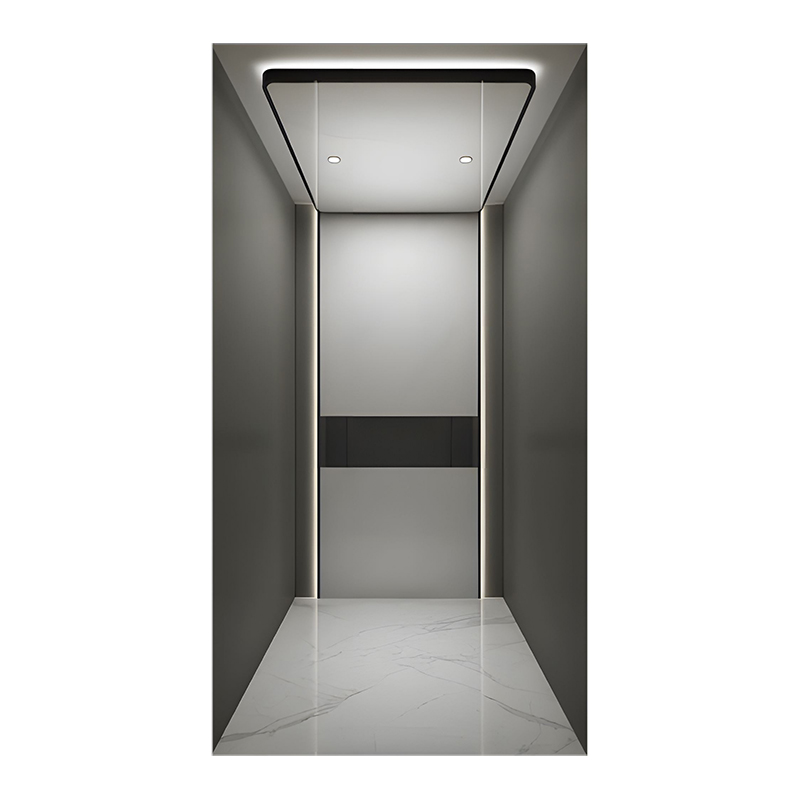
Balancing Budget and Quality
While budget constraints are real, prioritizing initial low cost over technical specification can lead to higher Total Cost of Ownership (TCO). A cheaper lift often utilizes lower-grade steel or simplified control logic, leading to frequent breakdowns. Suzhou Dongao Home Elevator Co., Ltd. focuses on balancing cost-efficiency with high-end quality. By integrating R&D, production, and sales, the company minimizes intermediate costs while maintaining strict quality control, serving as a reliable partner for high-end villa and residential projects.
Best Options for Residential Use: Small Electric Passenger Lifts
Space-Saving Designs for Villas and Homes
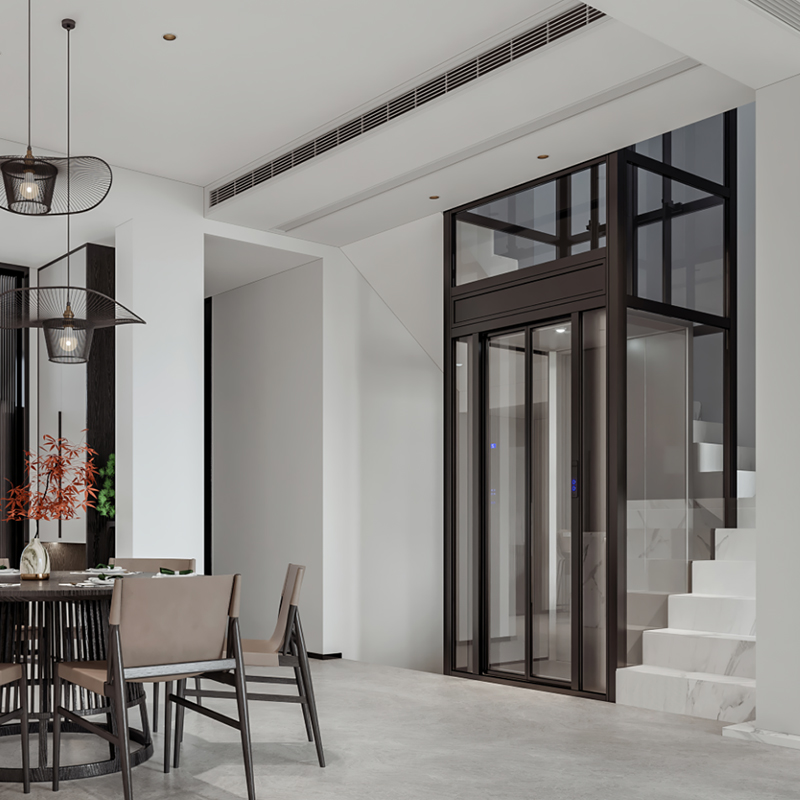
The demand for a small electric passenger lift for home has shifted engineering focus towards compact machine-room-less (MRL) designs. These units eliminate the need for a dedicated machine room by placing the traction machine within the hoistway headroom. Technical specifications often include:
- Shaft Utilization: Optimization of counterweight arrangements (side or rear mounted) to maximize car area within a minimal shaft footprint.
- Noise Control: Use of silent frequency converters and vibration-dampening rubber pads to ensure noise levels remain below 50dB, critical for residential environments.
Professional Solutions by Suzhou Dongao Home Elevator
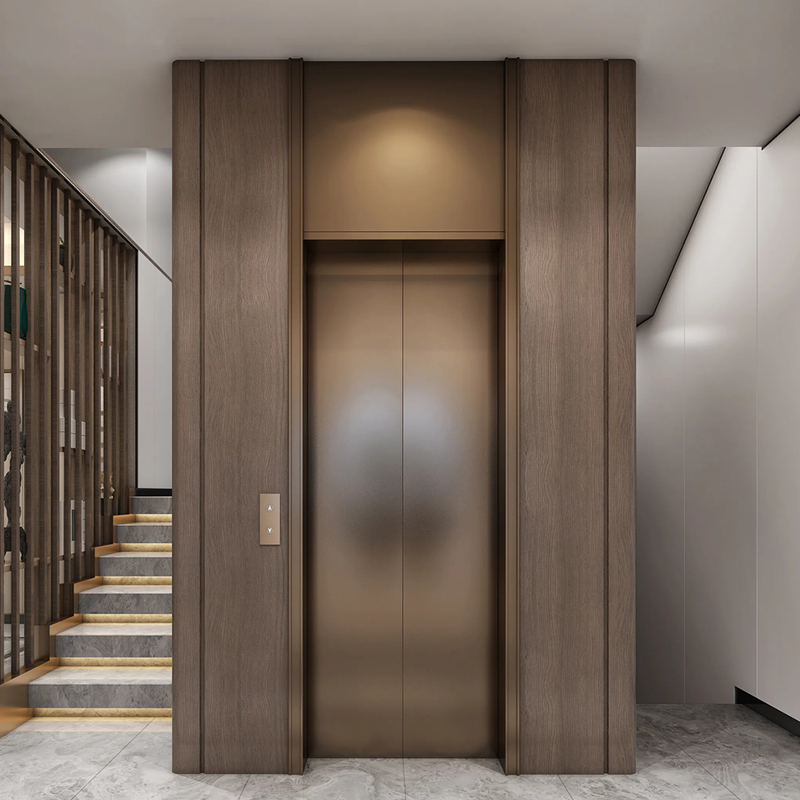
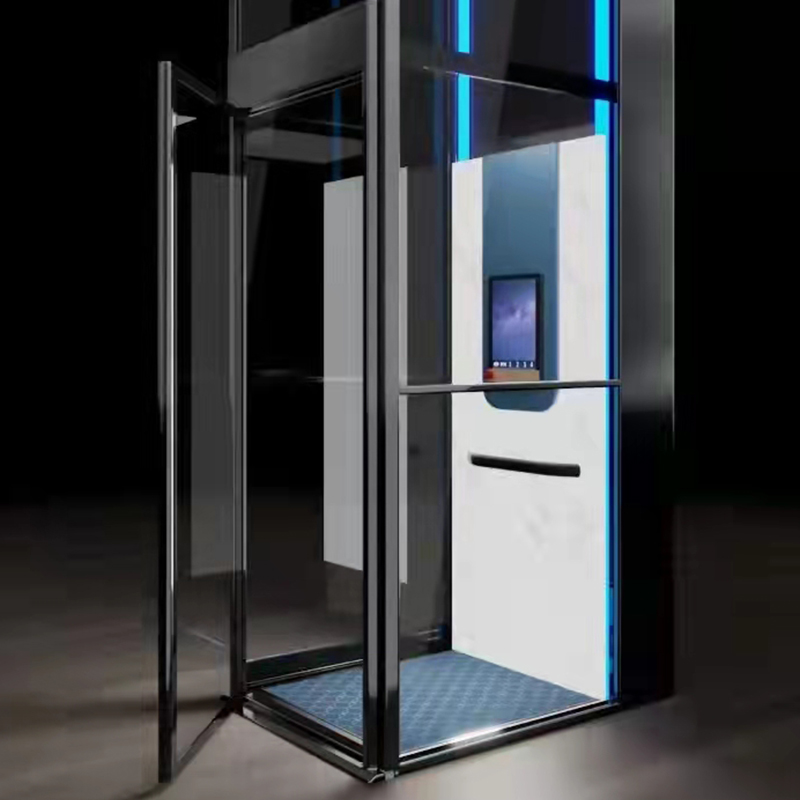
For residential projects requiring bespoke solutions, Suzhou Dongao Home Elevator Co., Ltd. stands out as a premier manufacturer. The company is a new type of lift enterprise integrating R&D, production, sales, installation, and maintenance, focusing on high-end villa lifts. With a plant area of 17,000 square meters and a team of over 100 professionals, the company has become the honorable choice for nearly 5,000 high-end villas and private residence owners. Located in Qidu, the innovation Silicon Valley of China's lift industry, the company leverages self-developed patented technology and Germany's advanced production equipment to deliver intelligent solutions.
Innovation Meets Craftsmanship
The technical edge of Dongao lies in its comprehensive introduction of Germany's advanced lift production technology. The use of efficient modern management modes empowers industry innovation breakthroughs. The company's R&D exhibition center, covering 800m², showcases the fusion of fashionable touch and luxury customization, proving that details determine quality. With nearly 200 agents covering 30 provinces in China, Dongao provides localized technical support and demonstration showrooms in key cities like Shanghai and Suzhou.
The Benefits of an Energy Efficient Electric Passenger Lift
Investing in an energy efficient electric passenger lift is not merely an environmental statement but a financial strategy. Modern traction lifts utilize regenerative drives that can recover up to 30% of the energy consumed during the descent of a loaded car. This energy is fed back into the building's grid. Furthermore, standby mode features automatically dim lights and disable ventilation during inactivity, drastically reducing idle power consumption. For a building operating 24/7, these savings can amount to thousands of dollars annually over the lift's 20-25 year lifespan.
Essential Electric Passenger Lift Maintenance Checklist
Monthly and Annual Maintenance Tasks
To ensure safety compliance and operational continuity, a strict electric passenger lift maintenance checklist is mandatory. Engineers should adhere to the following technical protocol:
- Monthly: Check door operator belt tension, verify door lock circuit continuity, inspect guide shoe clearance, and test car lighting.
- Quarterly: Lubricate guide rails, inspect traction sheave groove wear, check brake shoe clearance and spring tension, and verify safety gear tripping speed.
- Annually: Perform a full load safety test, inspect steel wire rope for broken strands or diameter reduction, and calibrate the leveling accuracy.
Dongao’s Comprehensive After-Sales Support
Maintenance efficiency relies on the manufacturer's support network. Suzhou Dongao Home Elevator ensures that every unit is backed by a team integrating installation and maintenance services. Their "one-stop" service model ensures that spare parts and technical expertise are readily available, minimizing downtime for the 5,000+ high-end villas and private residences they service.
A Guide to Electric Passenger Lift Installation
Preparing the Shaft and Site
A technical electric passenger lift installation guide begins with civil engineering verification. The shaft must be plumb with verticality tolerances within strict limits (typically ±10mm). Pit depth must accommodate the buffer stroke and car bottom clearance. For MRL units, the overhead height (headroom) is critical as it houses the traction machine. Engineers must also ensure the supporting beams meet the load-bearing requirements specified in the structural calculation sheet.
Streamlined Installation Process
The installation involves setting the guide rail brackets, mounting the car frame, and installing the traction machine. Dongao’s installation teams use laser alignment tools to ensure rail parallelism, preventing lateral vibration during travel. With their self-developed patented technology and efficient management mode, the installation process is streamlined, reducing on-site construction time and ensuring the lift operates smoothly from day one.
Conclusion
Selecting the right electric passenger lift requires a deep understanding of traction technology, energy dynamics, and maintenance protocols. By prioritizing energy efficiency and adhering to rigorous maintenance schedules, building owners can maximize the return on their investment. Suzhou Dongao Home Elevator Co., Ltd., with its commitment to high-end quality and innovation, serves as a testament to the advancement of the lift industry, offering reliable, intelligent solutions for modern architecture.
Frequently Asked Questions (FAQ)
1. What is the average lifespan of an electric passenger lift?
With proper maintenance and adherence to a strict electric passenger lift maintenance checklist, a high-quality traction lift can operate efficiently for 20 to 25 years. Key components like the traction motor may last longer, while ropes and control boards might require replacement around the 10-15 year mark.
2. How much electricity does a small electric passenger lift for home consume?
A small electric passenger lift for home typically consumes between 1.5 to 3.5 kW during operation. However, standby consumption is a significant factor. Energy-efficient models with standby modes can consume as little as 100-200 watts in idle mode, comparable to a refrigerator.
3. Do I need a machine room for an electric passenger lift?
Not necessarily. Modern Machine-Room-Less (MRL) lifts integrate the traction machine within the hoistway. This is particularly beneficial for villas and mid-rise buildings where space is at a premium. However, for high-speed lifts, a separate machine room is still preferred for maintenance accessibility.
4. How often should an electric passenger lift be serviced?
According to standard safety regulations, an electric passenger lift should undergo professional maintenance at least once a month. Additionally, annual safety inspections by certified bodies are mandatory in most jurisdictions to verify the performance of safety gears and brakes.
5. Can an electric passenger lift be installed in an existing building?
Yes. Retrofitting is common. A site survey is required to determine if there is sufficient structural support and shaft space. Companies like Suzhou Dongao Home Elevator specialize in custom solutions for existing high-end villas, ensuring the lift design integrates seamlessly with the interior architecture.
References
- ISO 4190-1:2010 - Lift installation — Class I, II, III and VI lifts.
- EN 81-20:2014 - Safety rules for the construction and installation of lifts.
- "Elevator Traffic Handbook: Theory and Practice" by Gina Barney.
- ASME A17.1 - Safety Code for Elevators and Escalators.
-
 Founding Road, Qidu Linhu Economic Zone, Wujiang City, Jiangsu Province, China
-
 [email protected]
-
 +86 15301576876/+86 0512-63818375
QR CODE

