


 En
En English
 русский
 Español
 عربى
عربى
Is a Traction Gantry Sightseeing Elevator Right for Your Building?
Posted by Admin | 05 Mar
Content
- 1 Understanding the Core: What is a Traction Gantry Sightseeing Elevator?
- 2 Planning Your Project: Key Considerations and Costs
- 3 Application-Specific Insights: Where Does This Elevator Shine?
- 4 Customization and Design: Crafting Your Vision
- 5 Making an Informed Decision for Your Building
- 6 Frequently Asked Questions (FAQ)
- 7 References
In modern architecture, the vertical transportation system is no longer just a utility; it is an integral part of the building's aesthetic and user experience. For architects, project managers, and procurement specialists, selecting the right system requires a deep understanding of engineering nuances. The traction gantry sightseeing elevator represents the pinnacle of this fusion, offering structural integrity, design flexibility, and panoramic experiences. This guide provides an in-depth technical analysis to aid in your specification and procurement process.
Understanding the Core: What is a Traction Gantry Sightseeing Elevator?
Before delving into project specifics, it is crucial to define the core technology and structure. This system combines three critical elements: the traction drive mechanism, the gantry support structure, and the sightseeing cabin design.
Traction vs. Hydraulic: Why Choose a Traction System for Your Sightseeing Lift?
The choice of drive mechanism is the first major engineering decision. While hydraulic systems are an alternative for low-rise applications, traction systems are superior for sightseeing elevators due to speed, energy efficiency, and travel height. The following table outlines the critical technical distinctions for engineering evaluation.
| Feature | Traction System (Geared/Gearless) | Hydraulic System |
|---|---|---|
| Travel Height | Unlimited; suitable for high-rise buildings (exceeding 100 meters). | Limited; typically max 20 meters due to cylinder buckling constraints. |
| Speed | Superior; ranges from 1.0 m/s to 3.0 m/s or higher, ideal for traffic efficiency. | Slower; generally max 1.0 m/s, limited by fluid dynamics. |
| Energy Efficiency | High, especially with gearless permanent magnet synchronous motors; regenerative drives can return power to the grid. | Lower; pump motor runs against gravity, consuming more power. |
| Environmental Impact | Minimal; no risk of oil leakage. Uses biodegradable lubricants in modern systems. | Potential environmental hazard from hydraulic oil leaks. |
| Machine Room | Flexible; can be machine room-less (MRL) or with a small machine room. | Requires a dedicated machine room for the power unit. |
The "Gantry" Difference: Structural Support and Architectural Integration
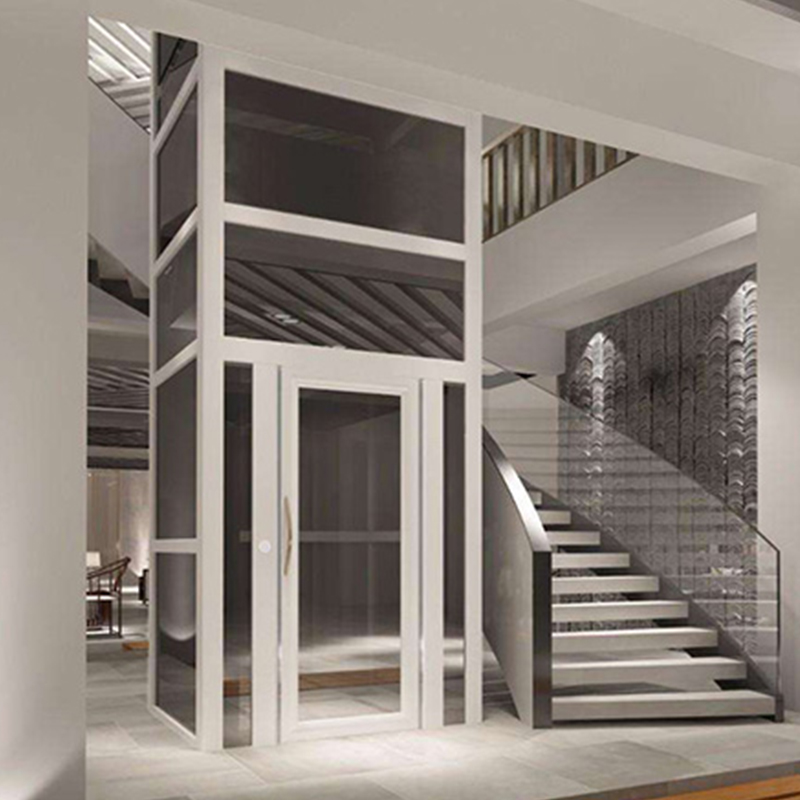
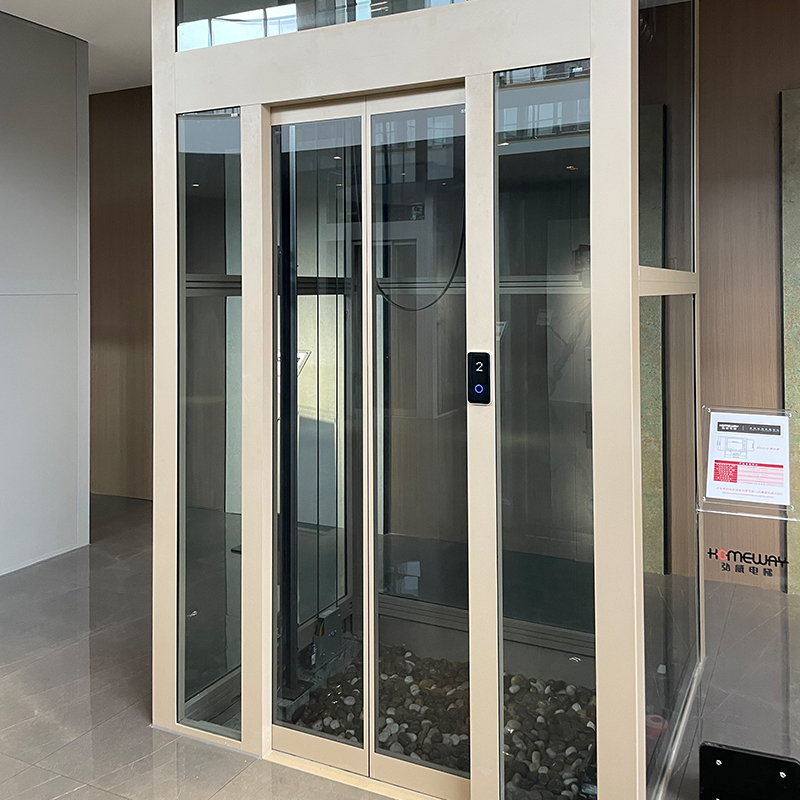
The term "gantry" refers to the load-bearing frame. In a traction gantry sightseeing elevator, this frame is critical. Unlike standard elevators where the rails bear primarily vertical loads, the gantry system distributes forces. The patent for a "sightseeing elevator car with a gantry outside" describes a design where the gantry (portal frame) is arranged outside the car, enhancing overall rigidity and allowing for a fully glass-enclosed cabin without structural interruptions . This design solves the challenge of mounting control boxes and handrails without obstructing views. For procurement, this means specifying a gantry system allows for larger uninterrupted glass panels, increasing the viewing area and visual grade of the car.
Beyond the View: Key Advantages of Panoramic Glass Elevators
The technical benefits extend beyond aesthetics. Modern panoramic lifts utilize double-laminated tempered glass (e.g., 6+6mm) with high light transmittance (≥91.5%) . For engineers, key specifications include:
- Structural Integrity: The glass must be non-structural; the surrounding gantry frame absorbs all horizontal forces, including passenger loading, ensuring safety without compromising transparency .
- Acoustic Performance: Advanced systems incorporate silent drive mechanisms and multi-level vibration dampening to keep operating noise below 55 dB, which is critical for high-end hotels and commercial spaces .
- UV and Glare Control: Optical-grade anti-glare coatings and UV protection layers are essential to maintain passenger comfort and prevent interior fading .
Planning Your Project: Key Considerations and Costs
Moving from concept to execution requires a detailed analysis of costs, logistics, and technical specifications. Accurate planning prevents budget overruns and structural incompatibilities.
Panoramic Traction Gantry Elevator Cost: A Detailed Breakdown
The panoramic traction gantry elevator cost is influenced by several high-level engineering factors. Procurement specialists should analyze costs across these categories:
Material Matters: Glass Quality, Steel Grade, and Finishes
- Glass: The specification of the laminated glass is a primary cost driver. Standard clear glass is the baseline, but costs increase for extra-clear glass with higher light transmittance, tinted glass (e.g., bronze, blue star grey), or switchable privacy glass .
- Steel Grade: The gantry structure typically uses galvanized or stainless steel. For outdoor applications, the cost of corrosion-resistant materials is non-negotiable to ensure longevity.
- Finishes: Interior finishes such as hairline stainless steel, wooden cladding, or custom etched panels add to the final cost .
Technology and Features: Drive Systems, Controls, and Safety
- Drive System: Permanent Magnet Synchronous Gearless (PMSG) machines command a premium but offer superior efficiency and smoother rides compared to geared machines .
- Control Systems: Advanced microcomputer group controls with features like destination dispatch and rush-hour mode increase functionality and cost but are essential for traffic flow in shopping malls .
- Safety Features: UPS for emergency release, direct external line communication, and advanced door sensors (e.g., safety touch panels with 10mm center deviation activation) are critical inclusions .
Installation Complexity: Site Assessment and Gantry Assembly
- Site Access: If the site is remote or complex (e.g., a tourist resort inside a mountain), logistics for transporting and assembling the gantry components can significantly increase labor and equipment costs .
- Hoistway Preparation: The cost of constructing a glass hoistway versus using a steel gantry structure differs. A full-glass hoistway requires more precise structural engineering.
Essential Installation Guide: What to Expect During Setup
A traction gantry elevator installation guide involves precision engineering steps. The process is governed by strict dimensional tolerances to ensure safety and smooth operation.
- Site Survey and Structural Assessment: The first phase involves verifying the building's ability to support the dynamic loads. The gantry structure often means the building bears no outer force, as the machine rack is fixed directly to the guide rail . However, the foundation must be assessed for buffer placement.
- The Installation Timeline: From Foundation to Final Testing:
- Guide Rail Mounting: Precision is key. The vertical error must be less than 1mm per 3m length, with steps between rails less than 0.05mm .
- Traction Machine Installation: The machine is hoisted into place. For gearless machines, the vertical error must be less than 1mm .
- Cage and Gantry Assembly: The gantry frame is assembled around the car. The car's horizontal and vertical levels must be accurate to 1/1000 .
- Electrical and Testing: After wiring, rigorous testing includes equilibrium coefficient checks, static load tests (150% load for 10 minutes), and safety device validation .
- Safety Protocols During Gantry and Glass Installation: Handling large glass panels requires specialized equipment. In some cases, a custom gantry crane on the roof is used, which must be engineered, certified, and load tested prior to use, with safety features like anti-two-block devices and high-visibility platforms .
Application-Specific Insights: Where Does This Elevator Shine?
The selection of an elevator is highly dependent on its intended use. Commercial, residential, and outdoor applications each place unique demands on the system.
Traction Gantry Elevator for Shopping Mall: Enhancing Customer Experience
In a shopping mall, the elevator is a marketing tool as much as a transport device. The traction gantry elevator for shopping mall applications must prioritize durability and traffic flow.
Traffic Flow Management in High-Traffic Commercial Spaces
Shopping malls require elevators with higher load capacities (e.g., 1000kg to 1600kg) and speeds (1.5 m/s to 2.0 m/s) to handle peak hour crowds . The control system should include duty/off-rush-hour modes to optimize waiting times. The structural design of the gantry allows for wider door openings (up to 1000mm) to facilitate easy entry and exit for families and shoppers with strollers .
Design Integration: Complementing Modern Mall Aesthetics
The visual impact is paramount. Options for one-sided, two-sided, three-sided, or fully panoramic glass configurations allow the elevator to become a centerpiece . The integration of intelligent RGBW lighting with color temperature adjustment (3000-4000K) can turn the elevator into a dynamic visual element, especially in the central atrium .
Outdoor Sightseeing Elevator Gantry System: Weather Resistance and Durability
Installing an elevator outdoors presents severe engineering challenges. An outdoor sightseeing elevator gantry system must be designed for environmental extremes.
Material Selection for Outdoor Environments: Corrosion Resistance
All exposed components—gantry steel, door panels, and guide rails—must have anti-corrosion properties. Using galvanized steel or applying specialized anti-rust treatments to shaft components is essential to prevent degradation from rain and humidity . The wire ropes may need galvanized construction with stronger corrosion resistance for longevity .
Waterproofing and Sealing for All-Weather Operation
Outdoor units face specific meteorological threats. Ice and frost can stop operation, requiring the elevator to be taken out of service in such conditions. High winds may necessitate speed reduction or shutdown. The design must include superior sealing at door clearances (typically less than 6mm) to prevent water ingress, and all electrical components must be adequately protected from humidity .
Customization and Design: Crafting Your Vision
For landmark buildings, a standard product is rarely sufficient. The industry has moved towards highly specific customization to meet architectural visions.
Custom Glass Gantry Sightseeing Lift: Options for a Unique Statement
A custom glass gantry sightseeing lift is a engineered solution tailored to the building's specific dimensions and aesthetic goals. This goes beyond selecting from a catalog; it involves collaborative engineering.
Shape and Size: Beyond the Standard Rectangular Cab
While rectangular cabs are standard, custom projects can explore square, round, or even capsule-shaped cabins . The car net size is calculated precisely based on required load capacity (e.g., 450kg for 6 persons, 800kg for 10 persons) . The gantry structure must be custom-engineered to support these non-standard shapes while maintaining safety margins.
Glass Types: Clear, Tinted, or Switchable Privacy Glass
Material science offers a palette of options. For scenic applications, anti-UV coatings prevent glare. For high-privacy areas (like luxury hotel suites), switchable glass that transitions from transparent to opaque via an electric current can be specified. Tinted glass in colors like amber provides a unique aesthetic while managing solar heat gain .
Interior Finishes and Lighting: Creating an Atmosphere
The interior of the custom glass gantry sightseeing lift is where brand identity or residential taste is expressed. Options range from minimalist hairline stainless steel with acrylic lighting panels to opulent marble-design floors and wooden cladding . Handrail materials—mirror stainless steel, rose gold etching, or leather-wrapped—add tactile luxury .
Making an Informed Decision for Your Building
Selecting a traction gantry sightseeing elevator is a significant investment that impacts building value and user experience for decades. It requires a partner capable of integrating R&D, precise manufacturing, and expert installation. The ideal supplier operates with a comprehensive approach, from leveraging advanced German production technology to providing a seamless service network [citation:company-provided-info]. By focusing on the technical specifications outlined—from drive systems to material grades—you ensure the final installation is not just a lift, but a landmark.
Final Checklist: Key Takeaways for Your Elevator Project
- Define the Drive: Confirm that a gearless traction system is specified for energy efficiency and ride quality.
- Analyze the Environment: For outdoor projects, ensure all materials are corrosion-resistant and rated for local weather extremes.
- Prioritize the View: Work with manufacturers who can provide the specific glass type (clear, tinted, laminated) that meets both safety codes and aesthetic goals.
- Verify Load and Speed: Match the elevator's capacity and speed (e.g., 1.0 m/s to 2.5 m/s) to the building's traffic patterns .
- Plan the Installation: Assess site logistics early, especially for retrofits or difficult-to-access locations, to accurately budget for installation complexity.
Frequently Asked Questions (FAQ)
- What is the typical lead time for a custom traction gantry sightseeing elevator?
While standard models might be quicker, a fully custom glass gantry sightseeing lift typically requires 25 to 30 days for manufacturing after the final specifications and drawings are approved, excluding time for site preparation and international shipping . - How does a gantry system improve structural safety compared to a standard elevator?
The gantry, often placed outside the car, acts as an exoskeleton that enhances the overall rigidity of the elevator system . It allows the glass to be purely decorative and transparent, as the gantry frame—not the glass—bears all the structural and operational loads, including forces from the guide rails and passenger movement . - Can a traction gantry elevator be installed in a building with no existing machine room?
Yes. Many modern traction gantry sightseeing elevators are available in Machine Room-Less (MRL) configurations. In this setup, the gearless traction machine and controls are designed to fit within the hoistway or require only a very small cabinet, saving valuable building space . - What is the maximum travel distance for this type of elevator?
Traction systems are capable of very high travel. While standard systems can easily handle mid-rise buildings, engineered solutions for special projects (like those inside mountains) have achieved vertical rises of over 336 meters (approx. 1100 feet) . For most commercial and residential buildings, the limit is dictated by building design, not the technology itself. - What are the critical dimensions needed before requesting a quote?
To get an accurate quotation, you must provide: (1) The required load capacity (e.g., 800kg or 10 persons), (2) The number of stops/travel height, (3) The exact shaft dimensions (width and depth), and (4) The type of machine room (existing, MRL, or new construction) .
References
- Suzhou Deman Elevator Co., Ltd. (n.d.). Glass Panoramic Capsule Elevator Square Round Sightseeing Passenger Elevator. Made-in-China.com.
- Chuangheng. (2025, January 14). Elevate Your Construction Projects with Traction Gantry Elevators. Troheng.com.
- China Elevator Association. (2018). 观光电梯的条件、技术要求 (Conditions and Technical Requirements for Sightseeing Elevators). elevator.org.cn.
- SAFE ELEVATOR. (n.d.). Customized Panoramic Lift. Safe-Elevators.com.
- Construction World. (2015). Effective vertical mobility solution for Smart Buildings. Constructionworld.in.
- Suzhou Deman Elevator Co., Ltd. (n.d.). Factory Price Square Glass Panoramic Elevator Lift for Shopping Mall. Made-in-China.com.
- Elevator VIP. (n.d.). Dimensions Parameter for Elevator Installation Preparation and Installation. Elevatorvip.com.
- Otis Worldwide. (n.d.). Henan Baoquan Tourist Resort | Otis Global Projects. Otis.com.
- Apex Steel. (n.d.). Innovation: Gantry Crane at the Space Needle. Apexsteel.com.
- Haining Hongshi Elevator Decoration Co., Ltd. (2016). Sightseeing elevator car with gantry outside (Patent No. CN105600656A). Patsnap.
-
 Founding Road, Qidu Linhu Economic Zone, Wujiang City, Jiangsu Province, China
-
 [email protected]
-
 +86 15301576876/+86 0512-63818375
QR CODE

