


 En
En English
 русский
 Español
 عربى
عربى
Is a Traction Home Elevator Worth It?
Posted by Admin | 17 Mar
Content
- 1 What Is a Traction Home Elevator?
- 2 Traction Home Elevator Cost: What to Expect
- 3 Traction Home Elevator vs Hydraulic: Which Is Better?
- 4 Can You Install a Traction Elevator in a Small Space?
- 5 Pros and Cons of a Gearless Traction Home Elevator
- 6 Why Choose Dongao for Your Home Traction Elevator?
- 7 Frequently Asked Questions
- 7.1 1. How long does a traction home elevator last?
- 7.2 2. Do traction elevators require a machine room?
- 7.3 3. What are the residential traction elevator installation requirements?
- 7.4 4. How does the traction home elevator vs hydraulic home elevator comparison affect my choice?
- 7.5 5. What are the gearless traction home elevator pros and cons for a villa owner?
- 8 References
Choosing the right residential elevator system is a long-term engineering and investment decision. Among available technologies, the traction home elevator stands out for its superior ride quality, energy efficiency, and durability — making it the preferred choice for high-end private residences and luxury villas worldwide. This guide examines every dimension of traction elevator technology from an engineering perspective, covering traction home elevator cost, system comparisons, spatial requirements, and key procurement considerations for B2B buyers and wholesale distributors.
What Is a Traction Home Elevator?
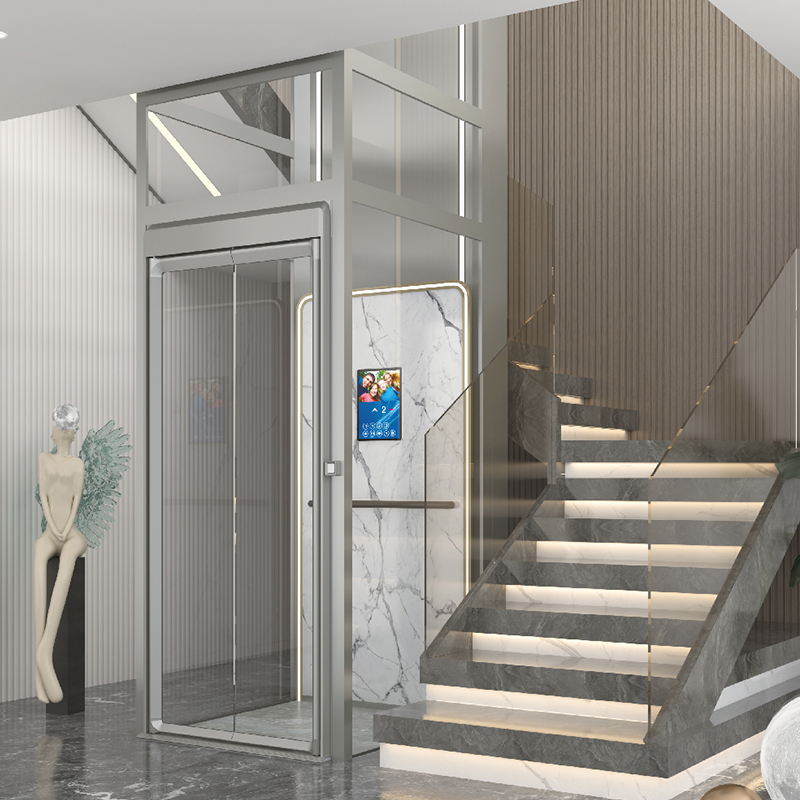
A traction home elevator operates by suspending the elevator car using steel wire ropes or flat belts routed over a drive sheave connected to an electric motor. Unlike hydraulic systems that push a piston beneath the cab, traction systems lift the car from above, using counterweights to offset the cab's load. This fundamental difference in mechanics defines how the system performs across every key metric: speed, efficiency, footprint, and service life.
How Traction Elevator Technology Works
The drive unit consists of a motor, brake assembly, and a traction sheave. The hoisting ropes are threaded over the sheave and connected to both the elevator car and a counterweight. When the motor turns the sheave, the rope moves, raising or lowering the car. The counterweight — typically equal to the empty car weight plus 40–50% of the rated load — dramatically reduces the net load the motor must overcome, which is why traction systems are inherently more energy-efficient than hydraulic alternatives.
- Motor type: Permanent magnet synchronous motor (PMSM) in gearless configurations
- Drive control: Variable Voltage Variable Frequency (VVVF) inverter for smooth acceleration and deceleration
- Rope material: High-tensile galvanized steel wire rope (6×19 or 8×19 construction) or coated steel belts
- Safety device: Progressive safety gear activated by an overspeed governor
- Buffer type: Oil buffer (for speeds above 1 m/s) or polyurethane buffer
Gearless vs. Geared Traction Systems
Within traction technology, there are two primary drive configurations: geared and gearless. Geared traction uses a worm-gear reduction unit between the motor and sheave, which limits speed but reduces motor cost. Gearless traction connects the motor shaft directly to the sheave, enabling higher speeds, quieter operation, and a longer service life due to fewer mechanical components. For residential applications, gearless traction home elevator systems are almost universally preferred.
| Parameter | Geared Traction | Gearless Traction |
|---|---|---|
| Speed Range | 0.25 – 1.75 m/s | 0.5 – 2.5 m/s (residential: 0.4–1.0 m/s) |
| Motor Type | AC induction + worm gear | Permanent magnet synchronous (PMSM) |
| Energy Consumption | Moderate | Low (up to 30% savings vs. geared) |
| Noise Level | 55–65 dB | 40–52 dB |
| Maintenance Interval | Every 3–6 months (gear oil checks) | Every 6–12 months |
| Service Life | 15–20 years | 25–30 years |
| Machine Room | Often required | Machine-room-less (MRL) capable |
Traction Home Elevator Cost: What to Expect
Traction home elevator cost is one of the most frequently researched topics among residential buyers and procurement managers. The total cost-of-ownership model must factor in initial capital expenditure, installation complexity, energy consumption, and maintenance schedules over the elevator's operational lifespan.
Initial Purchase and Installation Cost Breakdown
The upfront cost of a traction home elevator varies depending on the number of stops, cab size, finishing level, drive technology, and whether a machine room is required. The table below reflects typical market ranges for a 2–4 stop residential gearless traction system.
| Cost Component | Estimated Range (USD) | Notes |
|---|---|---|
| Elevator unit (supply) | $18,000 – $45,000 | Gearless MRL, 2–4 stops, standard cab |
| Custom cab finishes | $3,000 – $15,000 | Stainless steel, glass, wood veneer, etc. |
| Hoistway / shaft construction | $5,000 – $20,000 | Depends on existing structure |
| Electrical works | $2,000 – $5,000 | Dedicated circuit, earthing, lighting |
| Installation labor | $4,000 – $10,000 | Certified elevator technicians |
| Permits and inspection | $500 – $2,500 | Local authority jurisdiction |
| Total Estimated Cost | $32,500 – $97,500 | Varies significantly by region and spec |
Long-Term Maintenance and Operating Costs
Gearless traction systems carry a lower total maintenance burden than geared or hydraulic units. Because there is no gear oil to monitor, no hydraulic fluid to replace, and no pump seals to inspect, annual service is simpler. Typical annual maintenance contracts range from $800 to $2,500, depending on the number of stops and local labor rates. Component replacement cycles are long: wire ropes or belts are typically replaced every 10–15 years, and the PMSM motor carries an expected operational life of 25+ years under normal residential duty cycles.
Cost Comparison: Traction vs. Hydraulic Home Elevator
When evaluating traction home elevator cost against hydraulic alternatives, buyers should look beyond the purchase price. Hydraulic units often have a lower entry cost but incur higher long-term energy and maintenance costs. The table below summarizes 10-year total cost of ownership for a 3-stop residential installation.
| Cost Category | Traction (Gearless) | Hydraulic |
|---|---|---|
| Initial unit + installation | $45,000 – $75,000 | $28,000 – $50,000 |
| Annual energy cost (est.) | $80 – $180/year | $250 – $500/year |
| Annual maintenance | $800 – $1,500/year | $1,200 – $2,500/year |
| Fluid/oil replacement | None | Every 3–5 years (~$500–$1,000) |
| 10-Year Total (midpoint est.) | ~$68,000 | ~$72,000 |
Over a 10-year horizon, the total cost of ownership converges significantly, with traction systems often proving more economical after year 6–7 when energy and maintenance savings compound.
Traction Home Elevator vs Hydraulic: Which Is Better?
The debate between traction home elevator vs hydraulic home elevator is not simply about price — it involves a multi-dimensional engineering assessment covering performance, safety, environmental impact, and spatial integration. Both technologies have legitimate applications, but for luxury residential environments with 3 or more floors, traction systems consistently outperform hydraulic ones across most evaluation criteria.
Performance and Ride Quality
Traction elevators using VVVF control deliver exceptionally smooth acceleration and deceleration curves, with leveling accuracy typically within ±3 mm of the floor threshold. Hydraulic systems are prone to slight "creep" due to fluid compressibility and temperature sensitivity, resulting in less precise leveling. For passengers, particularly those with mobility challenges, this difference is perceptible and significant.
Energy Efficiency Comparison
The counterweight in a traction system offsets approximately 45–50% of the gross lifting load, meaning the motor only drives the net difference. In contrast, a hydraulic pump must work against the full weight of the car plus passengers on every upward trip, then dissipates that energy as heat when descending. Modern gearless traction units consume 40–60% less energy per trip compared to equivalent hydraulic systems — a critical factor for green building certifications such as LEED or BREEAM.
Space Requirements and Shaft Design
A common misconception is that traction systems always require a dedicated overhead machine room. Modern machine-room-less (MRL) gearless traction designs house the drive unit within the hoistway itself, requiring only a small control cabinet adjacent to the top landing. This eliminates the need for a separate machine room — a decisive advantage in retrofits and compact floor plans. The overhead clearance requirement is typically 2,800–3,200 mm above the top landing floor, which is achievable in most residential construction.
Safety Features Head-to-Head
Both system types must comply with applicable standards (EN 81-20/50 in Europe, ASME A17.1 in North America, GB 7588 in China). However, traction systems offer additional passive safety redundancy through the mechanical governor-activated progressive safety gear, which clamps the guide rails in the event of overspeed — a fail-safe mechanism that does not rely on electrical power. Hydraulic systems depend on electrically operated solenoid valves for emergency descent, which introduces a potential single point of failure.
| Safety Feature | Traction | Hydraulic |
|---|---|---|
| Overspeed protection | Governor + progressive safety gear | Valve-controlled (electrical) |
| Power failure behavior | Holds position; ARD brings car to nearest floor | Descends on battery-operated valve |
| Buffer system | Oil or polyurethane buffer in pit | Oil buffer in pit |
| Fire risk | Minimal (no hydraulic oil) | Low but present (oil under pressure) |
| Seismic performance | Good (rope flexibility absorbs movement) | Moderate (rigid piston structure) |
Can You Install a Traction Elevator in a Small Space?
Traction home elevator for small spaces is an increasingly relevant consideration as urban residences and luxury townhouses prioritize compact footprints without compromising on amenities. Modern MRL gearless traction technology has made significant footprint reductions possible without sacrificing safety or performance.
Minimum Space Requirements
The minimum hoistway dimensions for a single-person MRL gearless traction elevator typically start at 900 mm × 900 mm internal clear dimensions, though two-person configurations require approximately 1,000 mm × 1,200 mm. The pit depth for residential traction systems is commonly 500–800 mm, significantly shallower than many hydraulic configurations that require pit depths of 1,200 mm or more to accommodate the piston cylinder.
| Configuration | Min. Hoistway (W × D) | Min. Pit Depth | Min. Overhead |
|---|---|---|---|
| 1-person (250 kg) | 900 × 900 mm | 500 mm | 2,800 mm |
| 2-person (320 kg) | 1,000 × 1,200 mm | 600 mm | 3,000 mm |
| 3-person (400 kg) | 1,200 × 1,400 mm | 700 mm | 3,200 mm |
| Wheelchair accessible (630 kg) | 1,400 × 1,600 mm | 800 mm | 3,400 mm |
Design Solutions for Compact Homes
For traction home elevator for small spaces, several engineering adaptations are available:
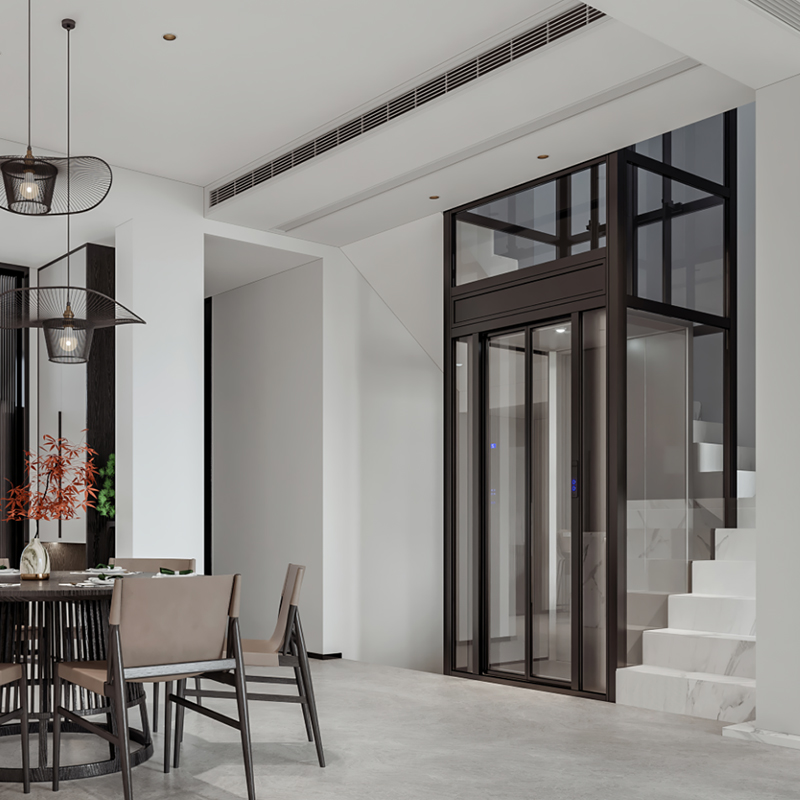
- Panoramic glass hoistway: Eliminates the need for a masonry shaft, using a self-supporting structural steel frame with laminated safety glass — ideal for open-plan interiors.
- Reduced pit kits: Some manufacturers offer pit reduction frames that allow installation with pit depths as low as 300 mm, using modified buffer systems.
- Twin-post or cantilever guide rail systems: Minimizes hoistway wall thickness requirements, recovering usable space in the surrounding rooms.
- Top-mounted drive unit: Positions the compact PMSM motor at the top of the hoistway to remove any below-slab excavation requirements.
Residential Traction Elevator Installation Requirements
Residential traction elevator installation requirements vary by jurisdiction but generally follow international standards. Key structural and technical prerequisites include:
- Reinforced concrete or structural steel hoistway capable of withstanding dynamic loads from guide rails (typically 15–25 kN at each rail bracket fixation point)
- Dedicated electrical supply: single-phase 230V or three-phase 380V, with a minimum circuit capacity of 16–32A depending on motor rating
- Pit waterproofing and sump pump provision where groundwater ingress risk exists
- Minimum 500 lux task lighting within the hoistway for maintenance access
- Emergency lighting and intercom system within the cab compliant with EN 81-28 or equivalent
- Local authority approval: building permit, third-party inspection, and statutory handover documentation
Pros and Cons of a Gearless Traction Home Elevator
Understanding the gearless traction home elevator pros and cons from an engineering standpoint allows buyers and specifiers to make a fully informed procurement decision. No elevator technology is universally optimal — the right choice depends on building configuration, usage intensity, budget, and long-term ownership goals.
Key Advantages
- Exceptional ride smoothness: VVVF-controlled PMSM motors deliver S-curve acceleration profiles with vibration levels below 25 mG (milli-g), virtually imperceptible to passengers.
- Energy regeneration capability: Many gearless drives include a regenerative inverter that feeds braking energy back to the building's electrical grid, achieving net energy recovery of 20–35%.
- Low acoustic signature: Without gear mesh noise, gearless units operate at 40–52 dB(A) at 1 meter — quieter than a standard household refrigerator.
- Extended service intervals: No gear oil, no hydraulic fluid, no pump wear — reducing scheduled maintenance to semi-annual or annual inspections.
- High floor-to-floor accuracy: Encoder-based position control achieves leveling accuracy of ±1–3 mm, critical for passengers with wheelchairs or mobility aids.
- Environmental compliance: No risk of hydraulic fluid spills or contamination — a requirement under EN 81-40 and many green building specifications.
Limitations to Consider
- Higher initial capital cost: PMSM motors and VVVF drives carry a higher component cost than AC induction motors used in geared or hydraulic systems.
- Minimum travel height: Traction systems are not cost-efficient for single-floor (2-stop) installations under 3 meters of travel — pneumatic or short-travel hydraulic units may be more appropriate.
- Overhead clearance dependency: Even in MRL configurations, 2,800–3,400 mm of overhead space above the top landing is required, which may not be available in low-ceiling residential structures.
- Rope/belt replacement: While infrequent (every 10–15 years), wire rope or steel belt replacement requires specialized technicians and temporary service disruption.
Who Should Choose a Gearless Traction Elevator?
Gearless traction is the optimal selection for:
- Villa or townhouse owners with 3 or more floors and regular daily usage
- High-end residential developments where acoustic performance and ride quality are non-negotiable
- Buyers seeking green building certifications (LEED, BREEAM, WELL)
- B2B procurement managers sourcing for luxury residential projects at scale
- Markets where long-term total cost of ownership is prioritized over initial capital outlay
Why Choose Dongao for Your Home Traction Elevator?
Suzhou Dongao Home Elevator Co., Ltd. represents a new generation of residential lift enterprise — one that integrates R&D, production, sales, installation, and maintenance under a single quality management system. Specializing exclusively in high-end villa lifts, Dongao has become the trusted choice for nearly 5,000 high-end villa and private residence owners, a track record that speaks to both product reliability and post-sales service excellence.
German Technology, Chinese Craftsmanship
Located in Qidu — recognized as the innovation Silicon Valley of China's elevator industry — Dongao operates from a 17,000 m² manufacturing facility with more than 100 specialists. The company has introduced Germany's advanced elevator production technology and precision manufacturing equipment, integrating it with proprietary patented innovations developed through its in-house Science and Technology R&D Exhibition Centre (covering 800 m²). This fusion of European engineering rigor and Chinese manufacturing efficiency enables Dongao to deliver gearless traction home elevator systems that meet or exceed international standards.
5,000+ High-End Villas Trust Dongao
Dongao's residential elevator solutions now cover nearly 30 provinces across China, supported by close to 200 authorized agents nationwide. Demonstration showrooms in Shanghai, Fujian, Jinan, Suzhou, Changzhou, Taicang, and other major regions allow architects, developers, and end users to experience the product before specifying. This distribution network — combined with a VVVF-controlled, modern management system — gives wholesale partners and B2B procurement teams the logistical confidence needed for large-volume deployments.
Custom Luxury Solutions for Private Residences
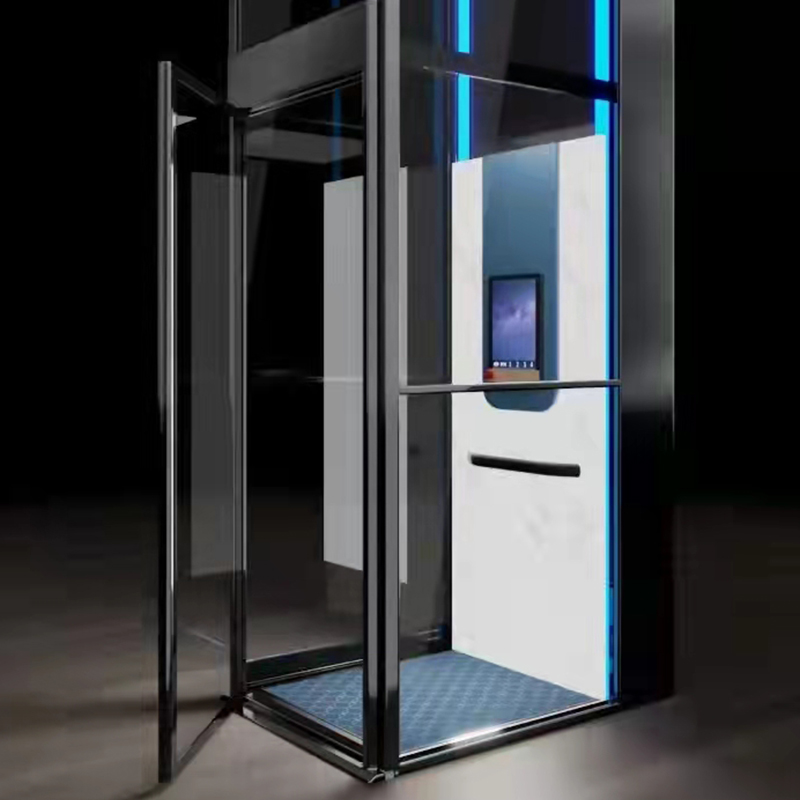
Dongao positions its traction home elevator systems at the highest tier of the residential market, combining fashionable touch-panel controls, luxury custom cab interiors, and intelligent smart-home integration capabilities. Every installation is treated as a bespoke engineering project — with details determining quality, and quality derived from professional execution. For developers, wholesale distributors, and private clients seeking a partner that can deliver intelligent, high-end villa elevator solutions at scale, Dongao offers a compelling and proven proposition.
Frequently Asked Questions
1. How long does a traction home elevator last?
A well-maintained gearless traction home elevator has a designed operational life of 25–30 years. Key longevity factors include the quality of the PMSM motor, the rope or belt specification, and adherence to the manufacturer's maintenance schedule. The hoistway structure itself — if built to specification — can outlast multiple elevator system generations.
2. Do traction elevators require a machine room?
Traditional traction systems required a dedicated machine room above the hoistway. Modern machine-room-less (MRL) gearless traction designs eliminate this requirement by integrating the compact drive unit within the hoistway itself, typically mounted in the overhead section. A small, flush-mounted control cabinet adjacent to the top landing floor is the only external equipment required — making MRL systems ideal for residential retrofits and new-build projects with limited floor plan flexibility.
3. What are the residential traction elevator installation requirements?
Residential traction elevator installation requirements include a structurally sound hoistway (concrete or steel), adequate pit depth (minimum 500 mm), sufficient overhead clearance (minimum 2,800 mm above top landing floor level), a dedicated electrical supply (16–32A depending on motor rating), and compliance with local building codes and elevator standards. A third-party inspection and statutory handover certificate are required before the elevator can be commissioned for use.
4. How does the traction home elevator vs hydraulic home elevator comparison affect my choice?
In the traction home elevator vs hydraulic home elevator comparison, traction systems outperform on energy efficiency (40–60% less energy per trip), ride smoothness (VVVF-controlled S-curve acceleration), acoustic performance (40–52 dB vs. 55–70 dB), and long-term maintenance cost. Hydraulic systems retain an advantage in initial purchase price for low-rise (2-stop) installations, particularly where overhead clearance is severely restricted. For 3-stop and above in a luxury residential context, traction is the preferred engineering choice.
5. What are the gearless traction home elevator pros and cons for a villa owner?
For villa owners, the primary gearless traction home elevator pros and cons break down as follows: advantages include near-silent operation, superior ride quality, energy regeneration, minimal maintenance downtime, and long service life; limitations include a higher upfront cost compared to hydraulic or geared alternatives, and a minimum overhead clearance requirement that must be factored into the architectural design. For most multi-story villa projects where budget allows, the performance and operational benefits of gearless traction strongly outweigh the higher initial investment.
References
- American Society of Mechanical Engineers (ASME). (2022). ASME A17.1/CSA B44 Safety Code for Elevators and Escalators. ASME Publications.
- European Committee for Standardization (CEN). (2014). EN 81-20: Safety rules for the construction and installation of lifts – Lifts for the transport of persons and goods. CEN/TC 10.
- Barney, G. C. (2003). Elevator Traffic Handbook: Theory and Practice. Spon Press, London.
- Al-Sharif, L. (2004). Elevator energy analysis using the Monte Carlo simulation technique. Energy and Buildings, 36(4), 301–310. https://doi.org/10.1016/j.enbuild.2003.12.012
- Nipkow, J., & Schalcher, M. (2006). Energy Consumption and Efficiency Potentials of Lifts. Swiss Federal Office of Energy (SFOE), Berne.
- International Organization for Standardization. (2011). ISO 8100-1: Lifts for the transport of persons and goods – General rules. ISO/TC 178.
- Lorente-Lerma, A., et al. (2020). Regenerative drives in traction elevators: Energy recovery analysis under real building usage patterns. Energies, 13(12), 3234. https://doi.org/10.3390/en13123234
-
 Founding Road, Qidu Linhu Economic Zone, Wujiang City, Jiangsu Province, China
-
 [email protected]
-
 +86 15301576876/+86 0512-63818375
QR CODE

