


 En
En English
 русский
 Español
 عربى
عربى
What Defines a True Heavy-Duty Custom Traction Platform Elevator?
Posted by Admin | 16 Dec
Content
- 1 Engineering the Core: Decoding Heavy-Duty Specifications
- 2 The Economics of Industrial Mobility: Calculating Total Cost of Ownership
- 3 Designing for Extreme Demands: Advanced Capacity Solutions
- 4 Sustaining Peak Performance: The Lifeline of Reliability
- 5 FAQ
- 5.1 What is the typical lifespan of a well-maintained custom traction platform elevator?
- 5.2 How does the maintenance cost of a traction platform elevator compare to a hydraulic one?
- 5.3 What are the key advantages of a traction system over hydraulic for a platform elevator?
- 5.4 When is a modernization retrofit a better option than a full replacement?
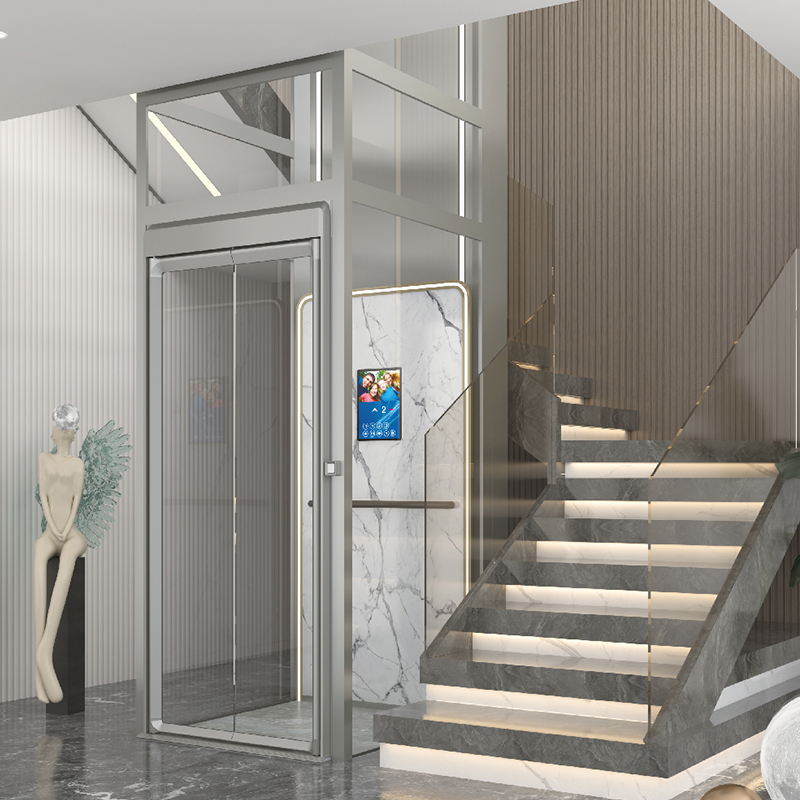
Traction Platform Elevator
In industrial and commercial settings where moving heavy loads between levels is a daily requirement, a Custom Traction Platform Elevator becomes a critical component of operational workflow. However, not all platform elevators are created equal. The distinction between a standard model and a true heavy-duty workhorse lies in its engineering DNA—the specific combination of structural integrity, performance under duress, and long-term reliability. This guide breaks down the essential elements that define a superior custom platform elevator, providing facility managers, engineers, and business owners with the knowledge to make a sound investment that will withstand the test of time and load.
Engineering the Core: Decoding Heavy-Duty Specifications
Understanding the technical specifications of a Custom Traction Platform Elevator is the first step in selecting a solution that matches your operational demands. True heavy-duty performance is not just about maximum load capacity; it's about how the system is engineered to handle that load consistently, safely, and efficiently over thousands of cycles. Key specifications provide a window into the product's durability and suitability for demanding environments like manufacturing plants and distribution centers.
- Structural Frame Design: The platform's frame, typically constructed from structural steel channels or I-beams, must be designed to resist deflection under maximum load, ensuring long-term alignment and smooth operation.
- Drive System Torque and Power: The traction machine must provide sufficient torque to start a fully loaded platform smoothly and maintain consistent speed, preventing motor strain and premature wear.
- Safety Factor and Code Compliance: Beyond meeting local codes, a heavy-duty elevator often incorporates a higher safety factor in its components, such as ropes, sheaves, and brakes, providing an additional margin of safety for intensive use.
Beyond Basic Load: Unpacking Heavy Duty Custom Traction Platform Elevator Specifications
When evaluating heavy duty custom traction platform elevator specifications, it is crucial to look beyond the headline load number. A comprehensive specification sheet should detail performance under dynamic conditions and the quality of core components. For instance, a 10,000-pound capacity elevator must perform reliably not just with a static load, but also when that load is applied unevenly or when the platform is starting and stopping frequently.
| Specification Category | Standard Platform Elevator | Heavy-Duty Custom Platform Elevator |
| Platform Deflection | 1/500 of the span (e.g., for general use) | 1/750 or less of the span (e.g., for precision equipment transport) |
| Duty Cycle | Standard duty (e.g., 100-150 starts per hour) | Heavy/Continuous duty (e.g., 180+ starts per hour) |
| Guide Rail System | Standard T-style rails | Heavier, reinforced rails with robust brackets for superior alignment and stability. |
The Economics of Industrial Mobility: Calculating Total Cost of Ownership
The initial purchase price is only a fraction of the total investment in a platform elevator. For a piece of equipment intended to last decades, the long-term operational and maintenance costs are equally, if not more, important. A focus on Total Cost of Ownership (TCO) ensures that the selected elevator is not only affordable to buy but also economical to operate and maintain throughout its service life.
Budgeting for Efficiency: Analyzing Custom Traction Platform Elevator Price for Warehouse Operations
Analyzing the custom traction platform elevator price for warehouse requires a holistic view. A warehouse environment presents unique challenges: high frequency of use, potential for impact from forklifts, and a need for minimal downtime. Therefore, the investment should account for features that reduce long-term costs. This includes an energy efficient VVVF drive system to lower electricity consumption, durable interior finishes that resist damage, and a robust door system designed for high-cycle operation. While these features may increase the initial price, they significantly reduce operational expenses and prevent costly interruptions to logistics workflows.
Designing for Extreme Demands: Advanced Capacity Solutions
Some applications go beyond standard heavy-duty requirements, demanding innovative engineering to move exceptionally large or heavy payloads. In these scenarios, off-the-shelf solutions are insufficient, and a fully customized design approach is necessary to achieve the required performance and safety standards.
Pushing the Limits: Innovative High Capacity Traction Platform Elevator Design Solutions
Developing high capacity traction platform elevator design solutions involves addressing fundamental engineering challenges. For capacities exceeding 20,000 pounds, a standard single traction drive may be inadequate. Solutions often include a tandem or multiple traction machine configuration to distribute the load, a reinforced hoistway structure, and custom braking systems with multiple independent brakes. The platform itself may be a double-deck design to handle oversized cargo or utilize a unique structural configuration to manage point loads. This level of customization ensures that the elevator is not just strong, but also smartly designed for its specific, extreme task.
Sustaining Peak Performance: The Lifeline of Reliability
The performance of a custom platform elevator is only as good as the maintenance program that supports it. In an industrial setting, unplanned downtime can halt production and result in significant financial loss. A proactive, well-planned maintenance strategy is not an optional extra; it is a critical component of asset management.
Maximizing Uptime: Your Essential Industrial Grade Traction Platform Elevator Maintenance Guide
An effective industrial grade traction platform elevator maintenance guide outlines a proactive, rather than reactive, approach. This involves scheduled inspections and servicing based on actual usage and condition monitoring, not just time intervals. Key maintenance pillars include regular inspection of wire ropes or belts for wear, checking traction sheaves for groove conformity, testing safety devices (governors, safety gears, and buffers) at prescribed intervals, and verifying the performance of the control and drive systems. Keeping detailed maintenance logs helps in predicting component life and planning replacements before a failure occurs, thereby maximizing operational uptime.
Revitalizing Legacy Systems: Planning a Custom Traction Platform Elevator Modernization Retrofit
For many facilities, a complete elevator replacement is not feasible due to cost or disruption. A custom traction platform elevator modernization retrofit offers a strategic alternative to breathe new life into an aging but structurally sound system. A comprehensive modernization can replace the core operational components—such as the controller, drive system, and doors—with state-of-the-art technology. This can result in dramatic improvements in ride quality, energy efficiency, reliability, and safety compliance, often at a fraction of the cost and time of a new installation. It is a practical solution for extending the service life of a critical asset while upgrading its performance to modern standards.
| System Component | Legacy System Issues | Modernization Benefits |
| Control System | Relay-based, unreliable, difficult to troubleshoot | Microprocessor-based for superior reliability, diagnostics, and features like Attended Car Operation. |
| Drive System | Inefficient, poor speed control, high power consumption | VVVF drive for smooth acceleration, precise leveling, and up to 50% energy savings. |
| Safety System | May not meet current code requirements | Updated to the latest ASME A17.1/CSA B44 safety standards, including new monitoring systems. |
FAQ
Here are expert answers to the most common technical and commercial questions about custom traction platform elevators.
What is the typical lifespan of a well-maintained custom traction platform elevator?
A properly maintained Custom Traction Platform Elevator has a typical service life of 20 to 30 years, and often longer. The key factor is the adherence to a rigorous preventive maintenance schedule as outlined in a comprehensive industrial grade traction platform elevator maintenance guide. Components like wire ropes and bearings will need replacement during this lifespan, but the core structure and hoistway can remain in service for decades.
How does the maintenance cost of a traction platform elevator compare to a hydraulic one?
In the long run, a Custom Traction Platform Elevator generally has lower maintenance costs than a hydraulic elevator of similar capacity. Hydraulic systems require regular monitoring and replacement of hydraulic fluid, are prone to cylinder leaks, and can be less energy-efficient. Traction systems, especially machine-room-less (MRL) models with permanent magnet motors, have fewer fluid-related issues and simpler mechanical systems, leading to predictable and often lower long-term maintenance expenses.
What are the key advantages of a traction system over hydraulic for a platform elevator?
Traction systems offer several advantages for platform elevators, particularly in multi-story applications. They are more energy-efficient, as they are counterweighted and do not require a power-intensive pump to lift the car. They can achieve higher travel speeds and are not limited by the practical height constraints of hydraulic cylinders. Furthermore, they do not carry the environmental risk of hydraulic fluid leaks and generally provide a smoother, more precise ride.
When is a modernization retrofit a better option than a full replacement?
A custom traction platform elevator modernization retrofit is a superior option when the existing elevator's hoistway, platform, and guide rails are in good structural condition. If the primary issues are related to outdated controls, an inefficient drive system, or non-compliant safety features, modernization can address these core problems at a lower cost and with less construction disruption than a full replacement. It is the most cost-effective path to upgrading performance, safety, and efficiency.
-
 Founding Road, Qidu Linhu Economic Zone, Wujiang City, Jiangsu Province, China
-
 [email protected]
-
 +86 15301576876/+86 0512-63818375
QR CODE

