


 En
En English
 русский
 Español
 عربى
عربى
How to Choose the Right Commercial Freight Elevator?
Posted by Admin | 24 Mar
Content
- 1 What Is a Commercial Freight Elevator?
- 2 Warehouse Applications: Engineering Specifications for Industrial Operations
- 3 Commercial Freight Elevator Cost Guide: Investment Analysis
- 4 MRL Freight Elevator Benefits: Space Optimization Technology
- 5 Freight Elevator Installation Requirements: Compliance Protocol
- 6 Custom Freight Elevator Dimensions Guide: Specification Protocol
- 7 Frequently Asked Questions
- 7.1 What is the typical lead time for commercial freight elevator installation?
- 7.2 How do MRL freight elevators reduce total building costs?
- 7.3 What maintenance schedule is required for warehouse freight elevators?
- 7.4 Can existing buildings accommodate freight elevator retrofits?
- 7.5 How are freight elevator costs calculated for budget planning?
- 8 References
Selecting a commercial freight elevator requires technical precision and operational insight. This guide addresses critical engineering specifications, cost structures, and installation protocols for B2B procurement professionals managing warehouse logistics, retail facilities, and industrial operations.
What Is a Commercial Freight Elevator?
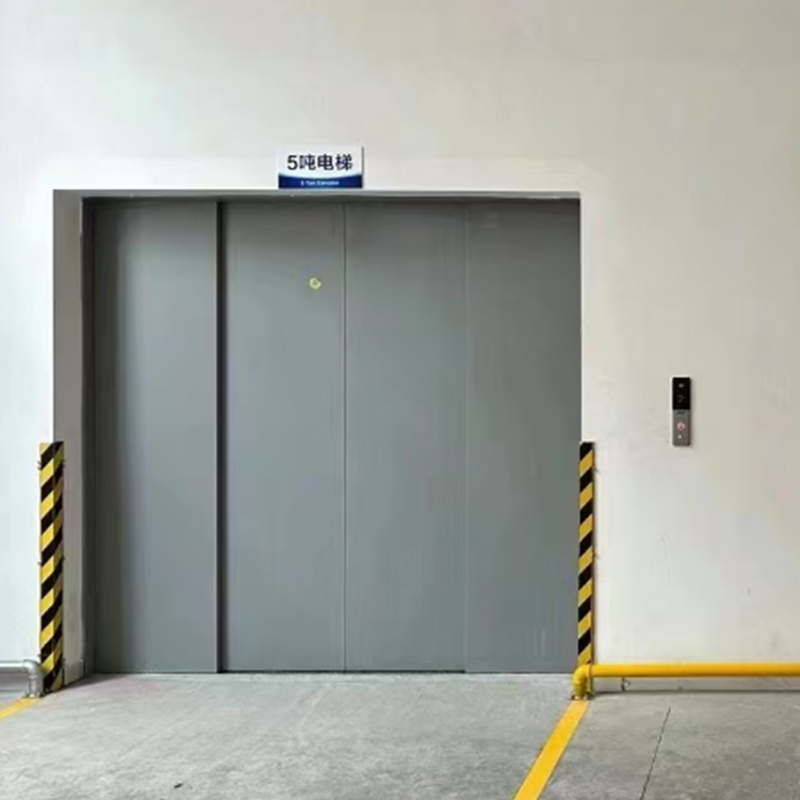
A commercial freight elevator is a vertical transportation system engineered specifically for moving goods, materials, and heavy equipment between building floors. Unlike passenger elevators, these systems prioritize load capacity, platform dimensions, and durability over aesthetic finishes and ride comfort.
Core Functional Specifications
Freight elevators operate under distinct mechanical parameters compared to passenger systems. The following comparison illustrates fundamental engineering differences:
Passenger elevators prioritize acceleration comfort and door operation speed, while freight elevator for warehouse applications emphasize structural reinforcement and sustained load tolerance. Freight systems typically utilize traction or hydraulic drive mechanisms with reinforced steel platforms rated for concentrated loads.
| Specification Parameter | Passenger Elevator | Commercial Freight Elevator |
| Rated Load Capacity | 450-1,600 kg | 1,000-10,000+ kg |
| Platform Construction | Standard steel deck | Reinforced steel with anti-slip surface |
| Door Configuration | Center-opening automatic | Vertical bi-parting or manual swing |
| Operating Speed | 1.0-2.5 m/s | 0.25-1.0 m/s |
| Control System | Collective selective | Car-switch or automatic operation |
| Safety Requirements | EN 81-20/50 | EN 81-20/50 + additional freight provisions |
Regulatory Classification Standards
Freight elevators fall under specific building code categories based on intended use:
- Class A: General freight loading (hand trucks, pallet jacks)
- Class B: Motor vehicle loading (automated guided vehicles, forklifts)
- Class C1: Industrial truck loading (forklift entry permitted)
- Class C2: Industrial truck loading with forklift retained during operation
- Class C3: Other loading with heavy concentration
Warehouse Applications: Engineering Specifications for Industrial Operations
Freight elevator for warehouse installations demand rigorous analysis of material flow patterns, peak load frequencies, and vertical transportation bottlenecks. Warehouse operators must evaluate cubic capacity utilization against throughput requirements.

Load Capacity Engineering
Determining appropriate load ratings requires analysis of maximum simultaneous cargo weight plus material handling equipment. Warehouse operations typically require Class C1 or C2 ratings to accommodate forklift entry.
The relationship between platform area and rated capacity follows established engineering principles. Exceeding platform area recommendations reduces safety margins and accelerates component wear.
| Warehouse Application Type | Recommended Capacity (kg) | Minimum Platform Dimensions (mm) | Door Opening Width (mm) |
| Light manufacturing | 1,000-2,000 | 1,400 x 2,100 | 1,200 |
| Distribution center | 3,000-5,000 | 2,000 x 3,000 | 1,800 |
| Heavy industrial | 6,000-10,000 | 2,500 x 4,000 | 2,400 |
| Automotive logistics | 5,000-8,000 | 2,200 x 5,000 | 2,000 |
Traffic Analysis Methodology
Calculate required handling capacity using the round-trip time formula:
- Identify peak 5-minute traffic period
- Determine required trips based on pallet/unit volume
- Factor loading/unloading time (typically 30-60 seconds per stop)
- Account for 80% utilization efficiency
- Specify number of elevators to achieve target wait times under 60 seconds
Vertical Transportation Integration
Modern warehouse design positions freight elevator for warehouse systems at material flow convergence points. Optimal placement minimizes horizontal transport distance and reduces forklift traffic congestion. Consider mezzanine integration, automated storage and retrieval system (AS/RS) interfaces, and shipping dock alignment.
Commercial Freight Elevator Cost Guide: Investment Analysis
Developing accurate capital expenditure projections for commercial freight elevator cost guide purposes requires disaggregating equipment, installation, and lifecycle components.
Capital Expenditure Breakdown
Total installed cost varies significantly based on capacity, travel distance, and building integration complexity. The following cost structure applies to standard installations in new construction scenarios:
| Cost Component | Percentage of Total | Variables Affecting Cost |
| Equipment (hoistway, car, machine) | 45-55% | Capacity rating, speed, door configuration |
| Installation labor | 20-30% | Travel distance, building height, regional labor rates |
| Hoistway construction | 15-25% | Fire rating, pit depth, overhead requirements |
| Electrical and controls | 8-12% | Automation level, building management integration |
Operating Expenditure Projections
Annual maintenance contracts typically represent 3-5% of initial equipment cost. Energy consumption for commercial freight elevator systems depends on drive type:
- Hydraulic systems: Higher energy use, lower maintenance frequency
- Traction MRL systems: 30-40% energy reduction, precision maintenance requirements
- Gearless traction: Premium efficiency for high-cycle applications
Total Cost of Ownership Calculation
Evaluate 20-year operational horizon including:
- Initial capital outlay
- Annual maintenance and inspection contracts
- Component replacement reserves (door operators, controllers at year 15)
- Energy consumption based on local utility rates
- Downtime cost allocation for business interruption
MRL Freight Elevator Benefits: Space Optimization Technology
MRL freight elevator benefits center on architectural flexibility and mechanical efficiency. Machine-room-less configurations eliminate dedicated machine room requirements, reducing building footprint and construction costs.
Mechanical Architecture Comparison
Traditional freight elevators require overhead machine rooms occupying 15-25 square meters of building area. MRL systems integrate permanent magnet synchronous motors within the hoistway envelope.
| Architectural Parameter | Traditional Machine Room | MRL Configuration |
| Overhead requirement | 3,500-4,500 mm above top landing | 3,000-3,800 mm (motor within hoistway) |
| Machine room footprint | 15-25 m² | Eliminated |
| Building height impact | Additional story or penthouse structure | Standard roof line maintained |
| Structural load | Concentrated machine room loads | Distributed hoistway loading |
| Energy efficiency | Standard induction motors | |
| PM synchronous motor, regenerative drive |
Application Suitability Analysis
MRL freight elevator benefits maximize value in specific building typologies:
- Urban infill projects with strict height restrictions
- Historic building retrofits where roofline preservation is mandatory
- Retail environments requiring maximum leasable floor area
- Facilities with moderate travel distances (typically under 75 meters)
Technical Limitations
MRL configurations face constraints in heavy-capacity applications. Current technology limits MRL freight systems to approximately 5,000 kg capacity for optimal efficiency. Higher capacities or extreme duty cycles may necessitate traditional machine room designs.
Freight Elevator Installation Requirements: Compliance Protocol
Freight elevator installation requirements encompass building code compliance, structural preparation, and safety system integration. Pre-installation planning prevents costly field modifications and schedule delays.
Hoistway Structural Specifications
The hoistway must accommodate dynamic loads during acceleration and deceleration phases. Structural engineering must verify:
| Structural Element | Minimum Requirement | Code Reference |
| Hoistway wall fire rating | 2-hour minimum (1-hour for sprinklered buildings) | IBC Section 3002.3 |
| Pit depth | 1,400-2,000 mm (based on buffer type and speed) | ASME A17.1 Section 2.2 |
| Overhead clearance | 3,800-5,500 mm (speed and drive dependent) | ASME A17.1 Section 2.4 |
| Hoistway plumb tolerance | ±20 mm over full height | Manufacturer specification |
| Machine room ventilation | 10 air changes per hour (if applicable) | ASME A17.1 Section 2.7 |
Electrical Infrastructure
- Dedicated 480V three-phase power supply (typical)
- Disconnecting means within sight of elevator equipment
- Emergency power transfer switch for firefighter service
- Traveling cable support infrastructure
- Machine room environmental controls (10-40°C operating range)
Pre-Installation Checklist
Prior to equipment delivery, verify completion of:
- Hoistway enclosure with approved fire rating
- Pit drainage and waterproofing
- Structural support for guide rail brackets at 2,500 mm intervals
- Floor thresholds set to final elevation
- Temporary protective coverings for finishes
Custom Freight Elevator Dimensions Guide: Specification Protocol
Custom freight elevator dimensions address non-standard cargo profiles, automated equipment interfaces, and architectural constraints. Customization extends beyond platform sizing to door configurations, control interfaces, and finish specifications.
Dimensional Specification Process
Accurate dimensioning requires analysis of:
- Maximum cargo unit dimensions (length, width, height)
- Material handling equipment turning radius
- Load distribution patterns (concentrated vs. distributed)
- Future capacity expansion requirements
- ADA compliance for attendant operation (where applicable)
Platform Configuration Options
| Configuration Type | Typical Dimensions (mm) | Application |
| Standard rectangular | 2,000 x 3,000 | General freight, palletized goods |
| Deep platform | 1,800 x 4,000 | Long material handling (pipe, lumber) |
| Wide platform | 3,000 x 2,500 | Equipment transfer, vehicle transport |
| Extra capacity | 2,500 x 4,500 | Heavy manufacturing, aerospace components |
| Low headroom | 2,000 x 3,000 (reduced OH) | Building retrofit, basement installations |
Door System Customization
Door configuration directly impacts operational efficiency:
- Vertical bi-parting doors: Maximum clear opening height, slower operation
- Horizontal sliding doors: Faster cycle times, reduced clear height
- Manual swing doors: Cost-effective for low-traffic applications
- Automatic horizontal doors: High-cycle applications, premium cost
Control System Integration
Custom freight elevator dimensions often necessitate specialized control interfaces:
- Remote call stations for automated guided vehicle (AGV) integration
- Load weighing systems with overload prevention
- Building management system (BMS) communication protocols
Frequently Asked Questions
What is the typical lead time for commercial freight elevator installation?
Standard commercial freight elevator lead times range from 12-20 weeks from contract approval. Custom freight elevator dimensions extend lead times to 24-32 weeks due to engineering review and specialized manufacturing. Installation duration varies from 4-12 weeks based on travel distance and building complexity.
How do MRL freight elevators reduce total building costs?
MRL freight elevator benefits include elimination of machine room construction (saving 15-25 m² of building area), reduced structural requirements, and lower roofing costs. These savings typically offset 8-15% of equipment premium. Energy efficiency improvements generate additional operational savings of 20-30% compared to hydraulic alternatives.
What maintenance schedule is required for warehouse freight elevators?
Freight elevator for warehouse applications require monthly maintenance visits under ASME A17.1 guidelines. High-cycle operations (over 100 starts per day) necessitate bi-weekly inspection. Annual full-load safety testing and five-year Category 1 testing verify continued safe operation.
Can existing buildings accommodate freight elevator retrofits?
Retrofit feasibility depends on structural capacity for hoistway loads, available pit depth, and overhead clearance. Freight elevator installation requirements in existing buildings often require structural reinforcement, pit excavation, or machine room addition. MRL systems reduce overhead requirements, improving retrofit viability in height-constrained structures.
How are freight elevator costs calculated for budget planning?
Commercial freight elevator cost guide methodology includes base equipment pricing (scaling with capacity and speed), installation labor, hoistway construction, and regulatory compliance costs. Budgetary allowances should include 15-20% contingency for unforeseen conditions. Operating costs require 20-year net present value analysis incorporating energy, maintenance, and modernization reserves.
References
- American Society of Mechanical Engineers. (2019). ASME A17.1-2019/CSA B44-19: Safety Code for Elevators and Escalators. ASME.
- International Code Council. (2021). International Building Code (IBC) 2021 Edition. ICC.
- European Committee for Standardization. (2020). EN 81-20:2020 Safety rules for the construction and installation of lifts - Lifts for the transport of persons and goods. CEN.
- Barney, G. C., & Dos Santos, S. M. (2017). Elevator Traffic Handbook: Theory and Practice (2nd ed.). Routledge.
- Strakosch, G. R., & Caporale, R. S. (2010). The Vertical Transportation Handbook (4th ed.). John Wiley & Sons.

-
 Founding Road, Qidu Linhu Economic Zone, Wujiang City, Jiangsu Province, China
-
 [email protected]
-
 +86 15301576876/+86 0512-63818375
QR CODE

