


 En
En English
 русский
 Español
 عربى
عربى
Why Traction Gantry Sightseeing Elevators Are the Standard for Modern Luxury Homes
Posted by Admin | 12 Oct
Content
- 1 What Is a Traction Gantry Sightseeing Elevator?
- 2 Why Are Traction Gantry Sightseeing Elevators Becoming the Standard for Modern Luxury Homes?
- 3 Traction Gantry vs. Hydraulic: A Quick Comparison
- 4 How to Choose the Right Traction Gantry Sightseeing Elevator
- 5 Frequently Asked Questions
- 5.0.1 Q1: Is a traction gantry sightseeing elevator safe for a private home?
- 5.0.2 Q2: Does this type of elevator need a deep pit or a machine room?
- 5.0.3 Q3: Can I install a traction gantry sightseeing elevator in an existing home?
- 5.0.4 Q4: How much should a luxury traction gantry elevator cost?
- 5.0.5 Q5: Will a sightseeing elevator increase my home’s value?
In recent years, the residential elevator has evolved from a rare novelty into a defining feature of luxury living. Today’s high-end homes demand more than simple vertical transport; they require a seamless fusion of performance, design, and comfort. Among the many elevator types, the traction gantry sightseeing elevator stands out as the new benchmark. Its combination of panoramic transparency, quiet mechanical action, flexible installation, and sophisticated styling makes it much more than a mobility device. It has become an architectural statement that enriches everyday living and shapes the first impression of a modern residence.
What Is a Traction Gantry Sightseeing Elevator?
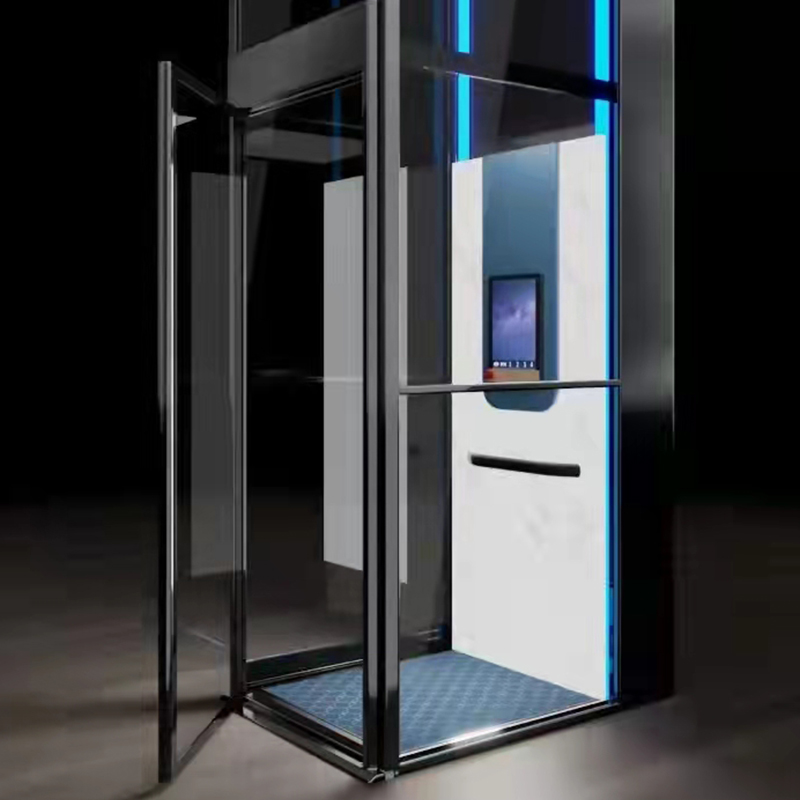
A traction gantry sightseeing elevator is a residential lift driven by a rope or belt system rather than a hydraulic jack. The term “gantry” describes the self-supporting frame of steel columns and beams that guides the elevator car along rigid rails. Because the frame carries the load, the elevator does not require a massive load-bearing shaft enclosure. The “sightseeing” feature is achieved through glass panels or broad glazed openings in the car, giving occupants an open view as they move between floors.
The system can be understood in five main components:
- A permanent-magnet synchronous traction machine that moves the hoisting rope or belt with high precision and low energy consumption.
- A counterweight that balances the car, reducing the effort required from the motor.
- A gantry-type guide rail assembly that keeps the car perfectly stable and aligned.
- A passenger compartment with panoramic glass, decorative finishes, and adjustable LED lighting.
- An intelligent control unit that manages floor calls, door operation, safety monitoring, and smart home integration.
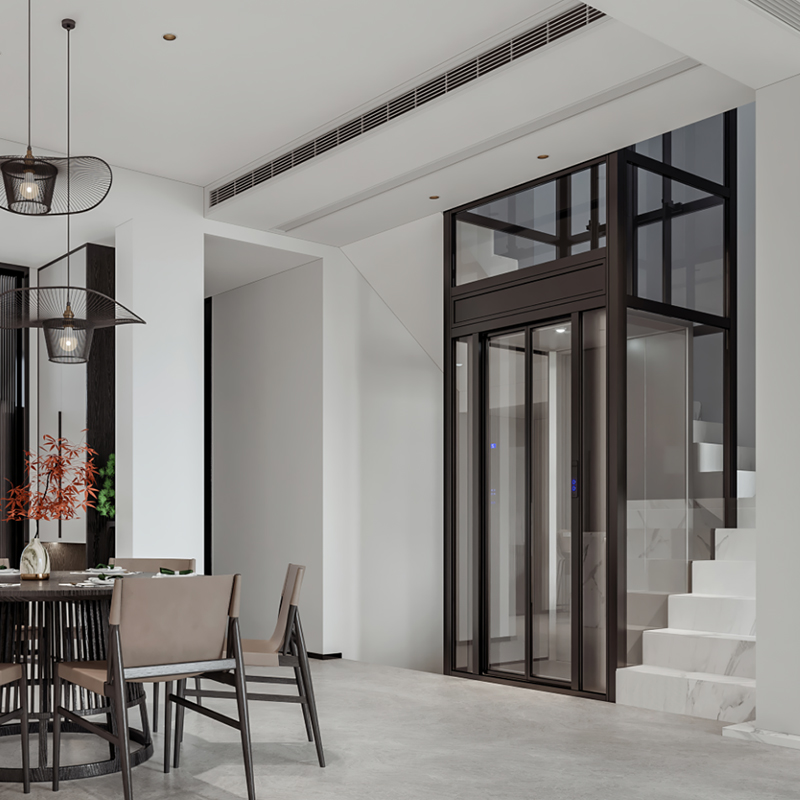 Custom Traction Gantry Sightseeing Elevator for Tight SpacesThis self-supporting gantry elevator with a glass car fits into narrow shafts, staircases, or ventilation areas where conventional lifts cannot. It uses traction drive for quiet, smooth operation, making it an ideal choice for architects and interior designers seeking spatial flexibility and visual openness.View Product →
For architects and interior designers, the self-supporting gantry construction is a game changer. It can be placed adjacent to staircases, inside old ventilation shafts, or in other compact spaces that a conventional hydraulic elevator would find impossible. Combined with the visual transparency of a glass car, the solution brings a sense of openness and movement into the heart of the home.
Why Are Traction Gantry Sightseeing Elevators Becoming the Standard for Modern Luxury Homes?
The shift toward traction gantry sightseeing elevators is not an accident. It reflects deeper changes in how luxury homeowners, architects, and builders define value. Five key benefits explain why this elevator type is increasingly the default choice.
A Bold Architectural Statement
A transparent elevator car opens up the interior like no other feature can. Light passes through the shaft, bouncing off polished surfaces and creating depth from the ground floor to the upper levels. The moving car becomes a kinetic sculpture that adds drama to staircases, atriums and curtain-wall glazing. Luxury homeowners increasingly request this effect because the elevator is no longer hidden away; it is intentionally showcased.
Flexible Installation for Challenging Spaces
Modern luxury residences often have compact footprints, unusual floor plans, or existing stairwells. A traction gantry system solves these problems with options for low pits, shallow overhead rooms, and no separate machine room. The frame can be installed in narrow shafts and in areas with limited structural support. For homeowners who are adding an elevator to an existing villa, this flexibility reduces demolition, shortens construction time, and preserves the original architecture.
Smooth, Quiet and Energy-Efficient Travel
Hydraulic elevators require a pump that forces oil into a jack, producing noise and consuming more electricity. By contrast, a traction elevator moves with the refined balance of a counterweighted drive system. The ride is exceptionally smooth and near-silent, which matters when the shaft is next to a bedroom, home office, or media room. Permanent-magnet synchronous motors also use less energy than traditional AC induction motors, and some modern systems can even recover energy during descent.
Safety and Reliability You Can Live With
The gantry frame gives the elevator rigid, precise guidance, while advanced safety features protect passengers in every situation. Modern traction home elevators include electromagnetic brakes, overspeed governors, emergency lowering devices, mechanical door locks, and redundant emergency lighting. Because there is no high-pressure hydraulic oil, there is little risk of leakage and less frequent maintenance. Owners enjoy long-term reliability without intrusive service interruptions.
Personalized Luxury Without Limits
Luxury is all about personal detail. With a traction gantry sightseeing elevator, owners can specify the height and type of glass, the finish of metal profiles, the material of the car panels, the color and dimming of the lighting, and even the interface design of the floor call buttons. Many manufacturers also offer custom car dimensions to fit unusual shaft layouts. The result is an elevator that matches the interior design language of the house rather than an off-the-shelf product.
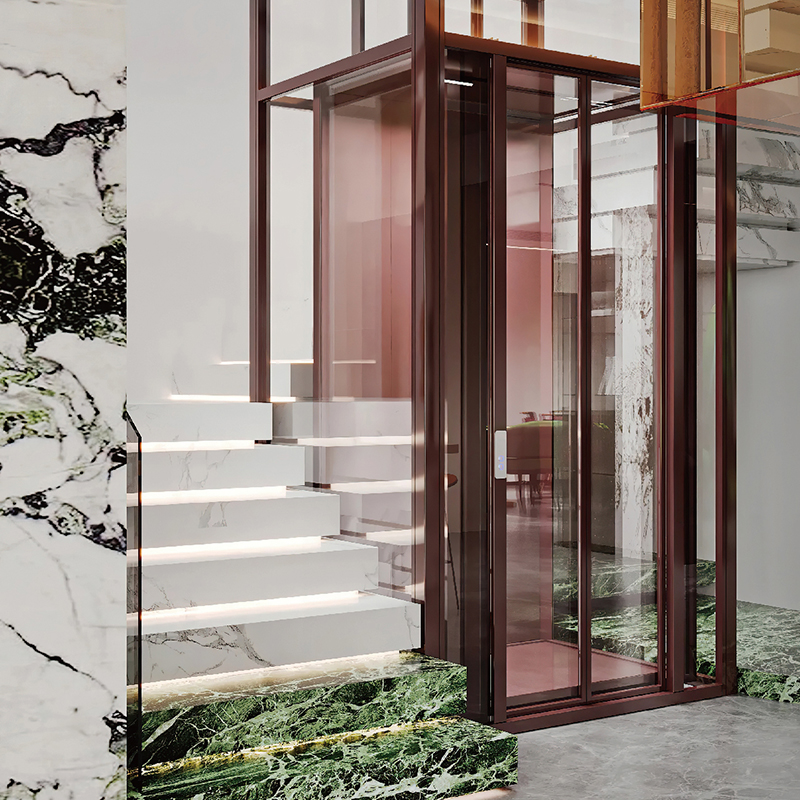 Traction Gantry Car Model with Customizable Interior and Compact DesignThis car model offers a small footprint with a pit from 150mm and top height from 2700mm, saving space. It features a gearless permanent magnet traction machine for stability and quietness, supports up to 400kg, and is fully customizable in glass, finishes, lighting, and car dimensions to match your home's interior design.View Product →
When these advantages are viewed together, they explain why so many premium residential projects now list a traction gantry sightseeing elevator as a mandatory feature rather than an optional extra.
Traction Gantry vs. Hydraulic: A Quick Comparison
Homeowners who are evaluating elevator types often ask how a traction gantry sightseeing model compares with the traditional hydraulic installation. The table below highlights the practical differences that matter most in a residential setting.
| Factor | Traction Gantry Sightseeing | Hydraulic Home Elevator |
|---|---|---|
| Machine room | Usually not required | Separate machine room or remote unit needed |
| Ride quality | Very smooth and quiet | Can be noisy because of pump and valves |
| Energy use | High efficiency and lower operating cost | Higher power consumption |
| Space requirement | Compact; suits narrow or shallow shafts | Requires deeper pit and more clearance |
| Maintenance | Fewer wearing parts and simpler service | Hydraulic oil and seals need regular attention |
| Travel height | Works well for multi-floor homes | Limited practical height |
| Environmental impact | No oil tank, less contamination risk | Hydraulic fluid lifecycle is a consideration |
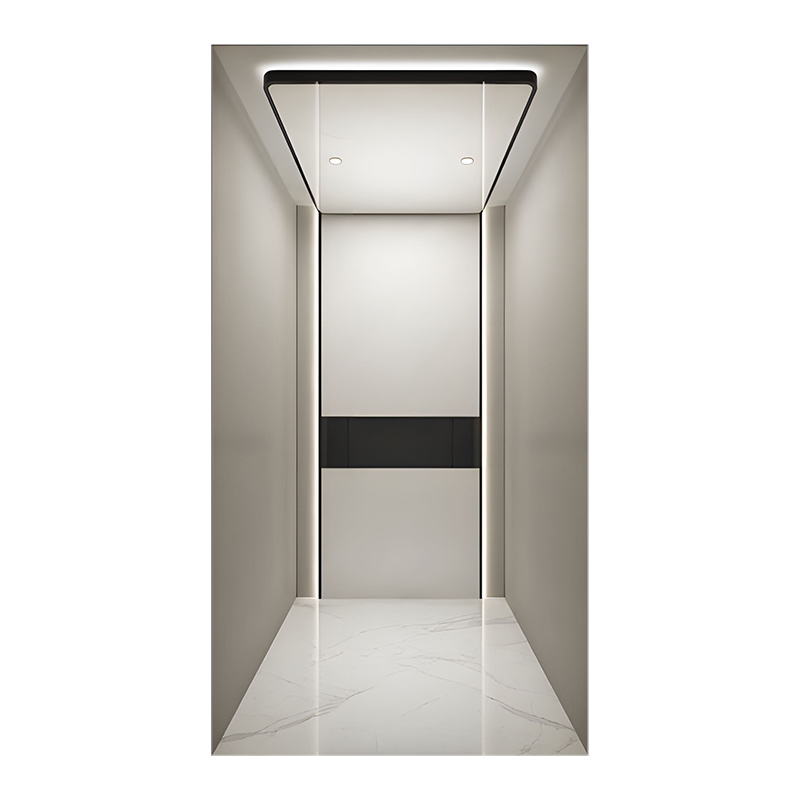 Trailing Gantry Sightseeing Elevator for Existing Shafts and Easy InstallationDesigned with an integrated closed car and self-contained shaft, this model installs quickly without additional construction. It adapts to any existing shaft size, requires only a 150mm pit, and uses efficient gearless traction technology for a quiet, smooth ride—making it a great choice for home renovations comparing favorably to hydraulic systems.View Product →
This comparison makes it easy to see why traction technology has become the preferred engineering basis for modern home elevators. The sightseeing element adds an aesthetic dimension without compromising structural performance. For a homeowner who plans to stay in the property for decades, the energy savings, quieter ride, and lower maintenance costs are powerful long-term arguments.
How to Choose the Right Traction Gantry Sightseeing Elevator
Selecting the correct elevator for a luxury home requires balancing architecture, safety, usability and personal style. The process can be broken down into clear decisions.
First, measure the available shaft. Width, depth, pit depth and headroom determine which configuration is realistic. If the space is tight or the elevator will serve an existing building, pay close attention to minimum pit and machine-room requirements. A specialist villa elevator solution can guide these measurements and ensure compliance with local regulations.
Second, define the level of transparency you want. A full-glass panorama creates a dramatic stage for the entire shaft, while a semi-open design with glass doors and decorative wall panels gives a softer, warmer character. In all cases, the glass should be laminated safety glass, and the frame must be engineered to support the dynamic loads of the moving car. For unusually shaped spaces, a custom design service allows the elevator to follow the architecture instead of fighting it.
Third, think about technology. True luxury is seamless: the elevator should communicate with the home automation system, support app-based calls, and send diagnostic alerts to the manufacturer. Basic safety equipment such as battery backup, manual lowering control, and door-protection sensors should be included as standard.
Finally, review the full delivery package. Ask about installation, commissioning, warranty and after-sales maintenance. A reputable manufacturer will offer a complete lifecycle plan, not just a piece of equipment. When all these factors are considered, the traction gantry sightseeing elevator can be integrated with confidence.
Frequently Asked Questions
Q1: Is a traction gantry sightseeing elevator safe for a private home?
Yes. Modern traction gantry elevators comply with strict residential elevator safety standards. They include electromagnetic brakes, overspeed governors, emergency alarm and light, battery-powered lowering, and mechanical door interlocks. The gantry frame also provides stable guidance, and routine inspections keep the system safe for years of use.
Q2: Does this type of elevator need a deep pit or a machine room?
No. Traction gantry sightseeing elevators are available with low-pit and low-headroom configurations, and they do not require a separate machine room. The hoisting machine is placed in a compact space, often within the shaft itself, which greatly simplifies the building work and makes retrofits practical.
Q3: Can I install a traction gantry sightseeing elevator in an existing home?
Yes, especially if the home has a stairwell, a wide corridor, or an unused service shaft that can accommodate the car. Because the gantry frame is self-supporting, the elevator does not rely on existing load-bearing walls. Shallow-pit and no-pit designs further expand the range of possible retrofit locations in luxury homes.
Q4: How much should a luxury traction gantry elevator cost?
The price depends on the size of the car, travel height, shaft condition, and the level of interior customization. However, traction technology has become more accessible over time, and the long-term savings in electricity and maintenance often offset the higher initial cost when compared with other premium elevator types.
Q5: Will a sightseeing elevator increase my home’s value?
In the luxury real estate market, a well-integrated elevator is increasingly treated as a standard expectation. A traction gantry sightseeing elevator, with its architectural appeal and high-end finish, can make a property more attractive to future buyers and help distinguish it among comparable homes. Its practical benefits for aging-in-place and accessibility add further appeal.
The traction gantry sightseeing elevator is no longer an extravagant afterthought. It combines practical engineering, adaptable construction, and strong visual identity in a way that aligns perfectly with the values of modern luxury homes: comfort, aesthetics, sustainability and intelligent convenience. As architects continue to regard vertical movement as an opportunity for creative expression, this elevator type will continue to consolidate its role as the standard of truly modern residential design. For homeowners who want to elevate both their space and their lifestyle, it is one of the most rewarding investments available today.

-
 Founding Road, Qidu Linhu Economic Zone, Wujiang City, Jiangsu Province, China
-
 [email protected]
-
 +86 15301576876/+86 0512-63818375
QR CODE

