


 En
 English
 русский
 Español
 عربى

Overspeed Governor & Safety Gear Engagement: Dual Safety Backup for Traction Lifts
Posted by Admin | 16 Nov
Content
- 1 Dual Safety Backup: Overspeed Governor and Safety Gear Engagement
- 2 What the Overspeed Governor Monitors and Triggers
- 3 How Safety Gear Engagement Grips the Guide Rails
- 4 Why Dual Safety Backup Matters in a Private Residence
- 5 Installation, Testing, and Maintenance That Keep Engagement Reliable
- 6 Space, Layout, and Product Choices
- 7 Common Engagement Faults and Warning Signs
- 8 Choosing a Traction Home Lift With a Verifiable Safety Chain
- 9 Frequently Asked Questions
- 9.0.1 Q1: What is the difference between the overspeed governor and the safety gear?
- 9.0.2 Q2: Does the governor stop the elevator by itself?
- 9.0.3 Q3: How is safety gear engagement tested?
- 9.0.4 Q4: Can safety gear engage during normal use?
- 9.0.5 Q5: Is dual safety backup required in a traction home lift?
- 10 The Bottom Line
Dual Safety Backup: Overspeed Governor and Safety Gear Engagement
In a traction home lift, the motor and brake handle normal travel. The dual safety backup is a separate mechanical chain: an overspeed governor watches car speed, and the safety gear waits at the guide rails. If the car exceeds its set speed, the governor trips a linkage, the safety gear engages, and the car is slowed by friction on the guide rails. This chain matters in a villa or private residence because it does not depend on the controller, the drive motor, or the normal brake to bring the car to a stop.
For homeowners, the useful question is not simply whether a governor is fitted. It is whether the governor, rope, linkage, and safety gear are designed, installed, and maintained as one system. That system is what turns two components into a genuine dual safety backup.
What the Overspeed Governor Monitors and Triggers
The governor is a speed-sensitive switch with a mechanical output. Its rope runs from the governor sheave down to a tension pulley and connects into the car safety gear linkage. During normal travel, the rope moves with the car while the governor flyweights stay below their trip point.
- Governor sheave and rope: transfer the speed signal and the trip movement to the car.
- Centrifugal flyweights: move outward when speed rises above the set threshold.
- Trip mechanism: catches the governor rope and holds it, creating the engagement stroke.
- Electrical switch: cuts power to the drive and signals the controller.
- Tension pulley: keeps the rope taut so the governor can act predictably.
The governor is not the brake. It detects excessive speed and starts the safety chain. The actual stopping force comes from the safety gear pressing against the guide rails.
How Safety Gear Engagement Grips the Guide Rails
The safety gear is mounted under the car and works only on the guide rails. When the governor holds its rope, the car continues to move, and that movement pulls the linkage upward. A wedge or roller is driven into contact with the rail, creating friction that slows and holds the car.
| Feature | Progressive safety gear | Instantaneous safety gear |
|---|---|---|
| Braking action | Wedge or roller closes gradually | Rapid wedge lock |
| Typical use | Higher speeds and larger cars | Lower-speed applications where allowed |
| Ride effect | Controlled deceleration | Abrupt stop |
| Inspection focus | Clearances, springs, wedge travel | Wedge contact and alignment |
The governor starts the event; the safety gear creates the stopping force. Both must move freely for the dual safety backup to work.
Many traction home lift designs use progressive safety gear for smoother deceleration, but the final choice depends on rated speed, car mass, and the applicable code. The important point is that the gear type matches the drive system and the rail condition.
Why Dual Safety Backup Matters in a Private Residence
Home lifts are low-speed machines, but low speed does not remove the need for independent overspeed protection. A governor and safety gear set gives the car a second path to a safe stop if the drive brake slips, a controller fault occurs, or a suspension component behaves unexpectedly.
- It works independently of the normal drive brake.
- It responds to actual car speed, not only to a controller command.
- It provides mechanical holding force at the guide rails.
- It supports safe evacuation and maintenance procedures.
- It complements door interlocks, buffers, overload detection, and emergency communication.
A traction gantry home lift is one common format for private houses, and its safety chain should be reviewed as part of the shaft layout, not after the cabin is chosen.
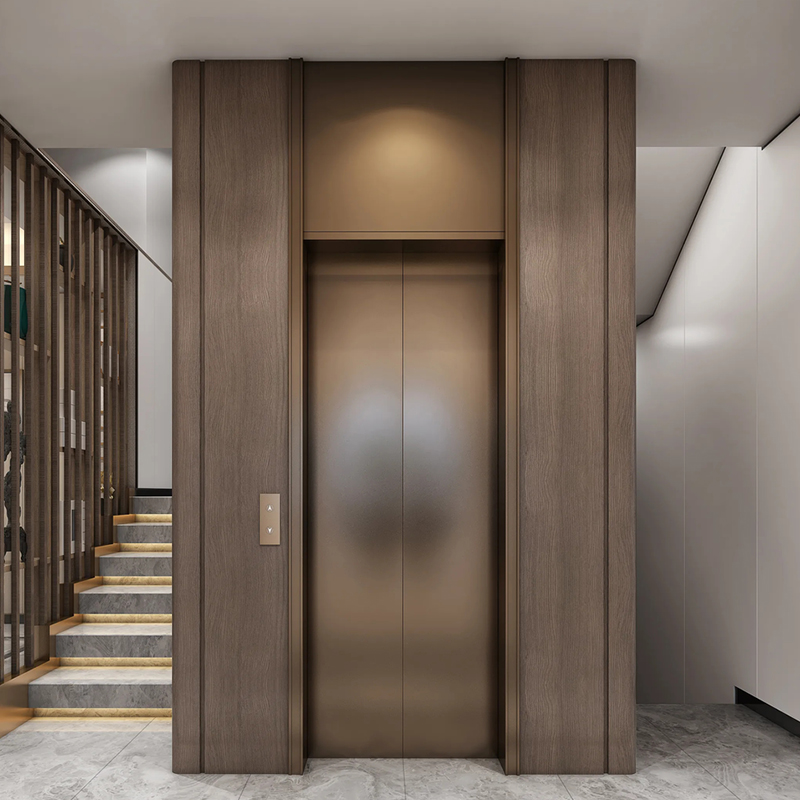 Custom Traction Gantry Home Elevator for VillasConfirm shaft layout and safety-chain details before cabin selection, with M80 existing-shaft compatibility, emergency power, and IoT monitoring.View Product →
Installation, Testing, and Maintenance That Keep Engagement Reliable
The safety chain is only as good as its installation. Three details deserve close attention.
Governor rope tension and alignment
A slack, twisted, or rubbing governor rope can delay the trip or prevent enough stroke at the safety gear. The rope path should be straight, the tension pulley should be free, and the rope should not contact shaft equipment during travel.
Guide rail condition and safety gear clearance
Safety gear needs clean, correctly aligned guide rails and the clearances stated by the manufacturer. Worn wedges, weak springs, or a stiff linkage can reduce grip. Friction surfaces should not be lubricated unless the manufacturer specifically permits it.
Shaft constraints in villa projects
Projects with shallow pits or compact shafts need a layout that preserves governor rope travel and safety gear movement. A low-pit elevator system can help with the building interface, but the safety chain still needs a full design check.
Testing should be done by qualified technicians using the applicable method. Typical checks include governor switch operation, trip speed verification, rope condition, linkage freedom, safety gear clearance, and a recorded engagement test. Maintenance records should show that the backup has been proven, not merely inspected by eye.
Space, Layout, and Product Choices
Shaft size influences the car, door, and safety gear layout. A narrow shaft may call for a compact platform design, while a conventional villa shaft may suit a gantry structure with more cabin flexibility. In both cases, the governor and linkage must remain accessible for testing and service.
A traction platform home lift can fit tighter spaces, but compact packaging must not hide the governor rope path or block the safety gear linkage. Ask for a drawing that shows these parts before the installation is fixed.
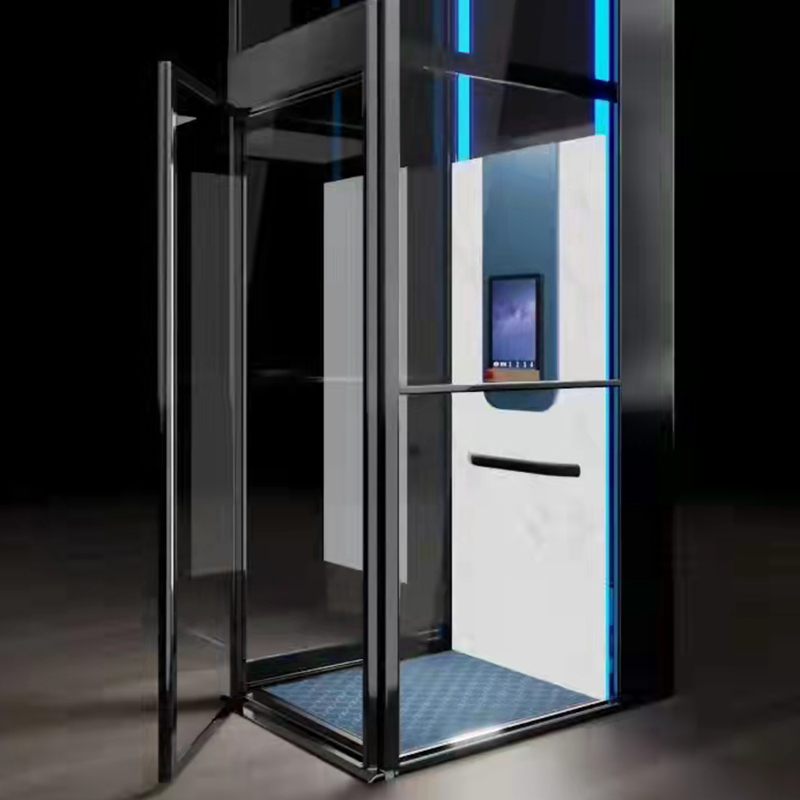 Traction Platform Home Elevator for Tight SpacesFor limited spaces, confirm governor rope path and safety gear linkage; customizable 250–1000 kg platform lift includes anti-pinch and emergency braking.View Product →
Common Engagement Faults and Warning Signs
Most problems appear before a passenger is at risk. Watch for these signals.
| Symptom | Possible cause | Action |
|---|---|---|
| Governor switch trips without overspeed | Slack or misaligned rope, electrical fault | Isolate lift and inspect governor circuit |
| Car does not grip in test | Stiff linkage, wrong clearance, worn wedge | Stop use and service safety gear |
| Rattling or rubbing at governor | Dry bearing, rope contact, debris | Check sheave, rope, and shaft clearance |
| Rail scoring after engagement | Poor rail alignment, incorrect gear setting | Inspect rails and reset safety gear |
Any doubt about engagement should be treated as a safety issue. Do not reset a tripped safety gear and return the lift to service without finding the cause.
Choosing a Traction Home Lift With a Verifiable Safety Chain
Ask for drawings that show the governor position, rope path, tension pulley, safety gear type, and linkage. At handover, confirm that trip tests and safety gear clearances are recorded. For a customized villa project, a custom design review should include these safety interfaces, not only cabin finishes.
Dong'ao Home Elevator's traction home lift range covers gantry, platform, and sightseeing formats. The safety chain should be confirmed for the selected model, shaft, and local code before production.
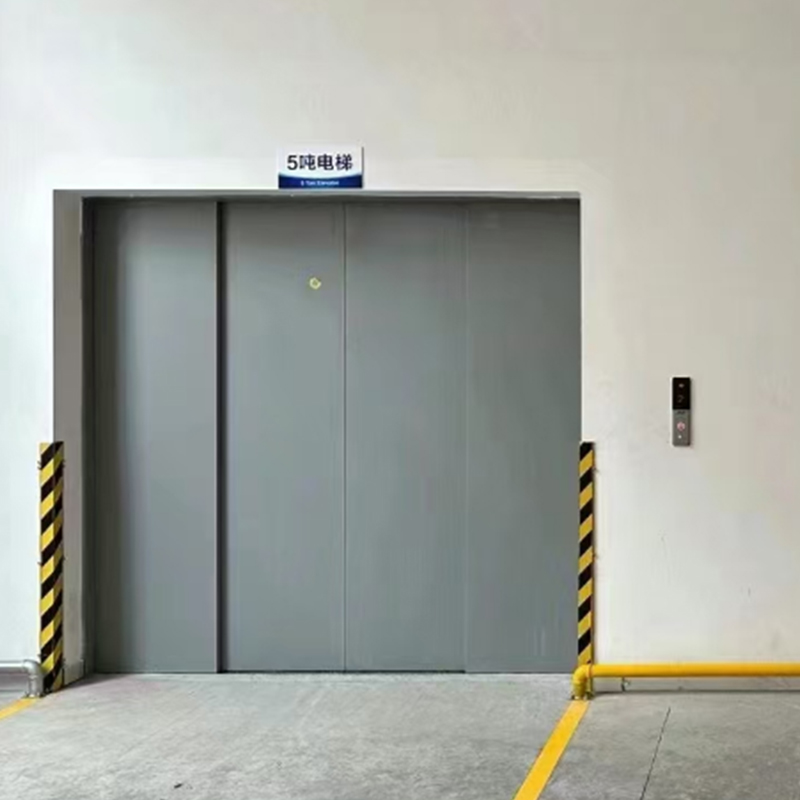
 Traction Home Lift Range for Villas and Private HomesCompare gantry, platform, and sightseeing formats, then confirm the safety chain for the chosen model, shaft, and local code before production.View Product →
Frequently Asked Questions
Q1: What is the difference between the overspeed governor and the safety gear?
The governor detects excessive speed and trips the linkage. The safety gear is the rail-gripping device that actually slows and holds the car.
Q2: Does the governor stop the elevator by itself?
No. The governor detects and triggers. The safety gear and drive cut-off create the stop.
Q3: How is safety gear engagement tested?
A qualified technician performs it under the applicable code, using calibrated governor trip testing and a linkage and safety gear check. It is not a homeowner task.
Q4: Can safety gear engage during normal use?
Not in normal travel. False engagement can occur from rope tension, linkage stiffness, or electrical faults; the cause must be found before reset.
Q5: Is dual safety backup required in a traction home lift?
Requirements vary by market and code. A traction home lift should still be designed with independent overspeed detection and rail-gripping safety gear, and the final design should be verified against local rules.
The Bottom Line
An overspeed governor and safety gear are not decorative add-ons. In a traction home lift, they form a dual safety backup that works independently of normal drive and brake systems. The quality of that backup depends on correct selection, clean installation, and routine proof testing. Homeowners should ask for evidence of all three.

-
 Founding Road, Qidu Linhu Economic Zone, Wujiang City, Jiangsu Province, China
-
 [email protected]
-
 +86 15301576876/+86 0512-63818375
QR CODE

